Showing posts with label Arts and Entertainment. Show all posts

Wednesday, 2 July 2014

A dash of Colour -- Keeping the flame of art alive in Balochistan


Shazia Batool’s conversations – about Quetta, about the worsening situation and the burgeoning art scene – are filled with dramatic gasps and sharp intakes of breath but beneath her excitable exterior lies a steely resolve. This is evident in the stories she chooses to tell: How she wheeled herself into Quetta’s Serena Hotel and insisted that its managers let her exhibit her paintings; how, as a physically-handicapped person, she manages to live in an environment not exactly friendly to the disabled, how she migrated to neighbouring Iran with her mother but, after living there for two years, decided to return alone and resume her life in Quetta.
“I felt trapped there,” she says simply.

This sense of entrapment had begun to affect her art. The paintings Batool creates here, in her home city, are large and vibrant and full of colour; they examine individuals in a crowd. In Iran, on the other hand, her work was darker: In one painting, a solitary woman, her face somewhat obscured, glances out of a window. There appears to be a general air of suffocation.

I find this intriguing. Batool lives with close relatives in Mariabad. It is a beautiful locality, one of two neighbourhoods in Quetta dominated by the Hazara community. When I enter Mariabad, scores of large houses rise up before me, minute in perspective, like concrete ants on craggy mountains that, in turn, are swallowed up by a deep blue winter sky. It is remarkably clean: the geography of the place is such that rainwater and snowmelt come rushing down from the mountains and into Mariabad’s crowded streets — so drainage is essential. But Mariabad is also one of the most heavily guarded neighbourhoods in Quetta — I am only able to enter because I am accompanied by art students from the Hazara community. Caught in the crosshairs of growing sectarianism and easily identifiable by their Mongoloid features, the Hazaras find themselves physically and psychologically backed into a corner.

Batool, who teaches art to young children, shows me a drawing made by one of her students. It is a rough sketch – cartoonish almost – of a bombing at a local Imambargah. The four-year-old girl has depicted the bombers as Yazid. Quetta was a different place when she was at college, says Batool, a graduate of the University of Balochistan’s fine arts department; at the time, she felt comfortable venturing into the main city. Today, she sometimes can’t even buy her art supplies. In Quetta, there is only one art supply store, Hatim, and it is in the main town. “We feel scared to go there,” she admits.

“Even Hatim doesn’t have all that we need, actually, so we still have to order some of our supplies from Lahore.”

And yet — she came back. Whatever shape home may be in, or whatever it may turn into, its pull can be hard to resist. As I set out to explore the art scene in Quetta, I discover that it is populated by precisely such people: Individuals who decided to stay, and if they left at all, decided to return, lovingly carving out a sacred space of their own.

 
Thirty years ago, four recent graduates of the National College of Arts (NCA) in Lahore returned to Quetta and established the fine arts department at the University of Balochistan. Their careers and life paths have since traversed different trajectories — but at the time, Jamal Shah, Feryal Gauhar, Kaleem Khan and Akram Dost Baloch were united by a common desire to make something happen. “I was completing my thesis at the NCA and, in the interim, I happened to go to Quetta,” recalls Jamal Shah. The vice chancellor of the University of Balochistan at the time, Akbar Shah, happened to be his distant relative and he asked Jamal Shah what his plans were post-graduation. “I mentioned that, deep down, my desire was to start a fine arts department in Quetta.” Akbar Shah asked Jamal Shah to produce a feasibility report and gave him the go-ahead to return and set up the department.

“It was a great beginning and a beautiful time,” Jamal Shah says. “There was tremendous enthusiasm and energy. Despite multiple strikes at the university, we made sure that our department was kept open. We got the best possible students in the first batch.”

In retrospect, the setting up of the fine arts department can be seen as the beginning of contemporary art
practice in Balochistan — though, perhaps, ‘resurgence’ may be a better word for it. The history of art in the province is not very well documented: Cave art from the Upper Paleolithic Age, circa 18,000 BC, has been discovered in the Musakhel district of the province but the millennia that follow are more or less a blank canvas. Individual artists begin to appear in and around the 20th century: One Syed Aziz Jan in Pishin, who made small figurines depicting daily life – people offering prayers, watching cockfights – and murtis and colossal effigies, 30 to 40 feet high, for the Hindu festival of Dussehra; one Zainuddin, who would paint on glass; and one Deepak, originally from Bombay, who painted renowned personages, such as Mustafa Kemal Ataturk. But apart from these and a few others, until the 1970s and 1980s, the practice of art in Balochistan remained restricted mostly to signboard painters.
“Signboard painters had a major influence on the Balochistan art scene,” says Kaleem Khan. “Names such as Shafi Sahib, Lala Aziz and Khalid Mengal were important.” So were the NCA and Punjab University — the early teachers at the local arts council in the 1970s, before the founding of the fine arts department at the University of Balochistan, all had degrees from there.

“Sadequain used to live in Quetta before he became known. Saeed Akhtar, the renowned Pakistani portrait painter, spent his childhood here, as did Professor Ijazul Hasan,” says Kaleem Khan as he lists some of the earliest influences on artists and art practice in Quetta. Of course, there might be many other names, he notes, but we no longer know them. They are invisible, their voices diminished due to lack of interest and poor documentation.

Today, of the quartet that established the fine arts department, only Akram Dost Baloch remains at the university. I visit him on a cold winter morning at his office, which also serves as his studio — there are paintings all around. Our conversation is frequently interrupted by students and faculty members dropping in to say hello — the soft-spoken professor is clearly well liked. I can see the onset of age on his features, as well as the impact of working amid multiple challenges. His son was gunned down recently while returning to Quetta after attending a wedding in Noshki. The grief-stricken father hasn’t created any new art work since.

But the pride Akram Dost Baloch takes in the department he has established, and its contribution to the community at large, is nonetheless evident. “There are now three [fine arts] departments at the university level in Quetta,” he says. “And part of the faculty at these institutions are graduates of this department.”

Although Quetta is often perceived to be at the margin of the margins by the greater part of the world, it has managed to carve out a small but vibrant space for itself as far as art is concerned. Apart from the three university departments, there is the state-led arts council now known as the Idara-e-Saqafat, a sprinkling of art galleries, a roster of exhibitions as well as an artists’ society. Within Balochistan, the city serves as a centre for the arts world, attracting students from all over the province.

During my time in Quetta, I meet Naseeb Khan, a 27-year-old student in the fine arts department headed by Kaleem Khan at the Balochistan University of Information Technology and Management Sciences (known locally as the IT University). He will be part of the department’s first graduating class. Originally from Kuchlak, a small village north of Quetta, he has three young children and a wife, who, he says, remains rather concerned about his love for art. To support them, he paints signboards and trucks, sometimes for as low as 1,000 rupees. He hopes his children will follow in his footsteps — he has even named one of his sons Musawwir, which means ‘artist’ in Urdu. His own father was a truck driver.
 "The crowd" by Shazia Batool

 Tamseel graduated from the fine arts department at the Sardar Bahadur Khan Women’s University in 2009. She was lucky that the department, exclusively for women and the only one among the three in Quetta to have its own building, opened when it did — she says she didn’t feel very comfortable going to the University of Balochistan due to its history of political trouble and violence. Hailing from a family well-versed in Persian and other regional languages and literature and originally coming from Loralai, a small town located in the Pakhtun part of Balochistan, she now illustrates books on Pashto poetry. Initially, she was pressurised by relatives not to sign her name on to the illustrations but, she is quick to add, “When my father found out I was illustrating books, he was very proud of me. In fact, his main complaint was that I hadn’t signed my name.”

Despite the fact that an all-female arts department has made a difference, there still does appear to be a relative lack of female leadership within the local art world. Tamseel now teaches at the IT University. She is one of the four female teachers in the varsity’s fine arts department – a heartening sign – but the societal bias against art is something she and her students have to contend with on a regular basis. “Everyone is born drawing but then you grow up and are made to change it,” laments one of Tamseel’s first-year students. “I don’t have much value in society as a woman, but the way I make my art, that is my art,” she adds.

One of the biggest complaints in Quetta vis-à-vis other provincial capitals is regarding the lack of opportunity for up-and-coming artists, regardless of gender. Local students are regularly ignored in national shows, often without any explanation. One of Naseeb’s most striking paintings, titled Walwal, explores under-age marriage in Pakhtun and Baloch cultures: A faceless woman, presumably a child bride, is led across a vast landscape by an older man. It is an image that deserves a national audience — and yet, sadly, it may never find one. Khuda-e-Rahim, the current assistant director of the Idara-e-Saqafat (and a graduate of the University of Balochistan fine arts department) claims that his organisation has sent many proposals to the Pakistan National Council of Arts (PNCA) in Islamabad for an exhibit on contemporary art from Balochistan but has never received a response.
Interestingly enough, unlike in other parts of the country where lack of government patronage for art is the most common complaint, in Quetta – up until recently, at least – it was the state-led Idara-e-Saqafat, headed by the energetic and effusive Abdullah Baloch, that served as the focal point for art education and promotion. Many young aspiring artists have studied and trained here before securing admission to arts colleges elsewhere in the country. But, the organisation which once operated relatively more independently under the PNCA, now falls under the provincial Ministry of Cultural Affairs, and this has resulted in its own set of problems: The Idara-e-Saqafat appears to be bogged down by bureaucracy and there are whispers that Kaleem Khan, a Pakhtun, left it due to ‘ethnic issues’.

The only art exhibition opening that takes place during my stay in Quetta is under the auspices of the Idara-e-Saqafat. It is a showcase of calligraphy — the attendees and artists are all male. More problematically, some of the organisers have their work exhibited as well, a clear blurring of the lines between the promoters and the promoted. None of the work is sold.

There are also some private initiatives to promote contemporary art. The Shal Art Gallery, housed within the Brahui Academy, a beautiful sandstone building, was founded by Abdul Hameed Baloch, a fatherly figure from Kalat and once a student of Kaleem Khan. The academy faces serious problems – there is, for instance, no gas for room heating or electricity – but it offers a free space for artists to create works and exhibit them. It is also home to the city’s only artists’ society, created seven or eight years ago. “Our mission was to promote the arts in Balochistan,” Abdul Hameed Baloch tells me. “Paintings would never get sold here.” But the first time they held an exhibition, a showcase of artist Aziz Mengal’s works, almost a dozen paintings ended up being sold, he tells me with pride.

The Hazara community has its own initiatives. On the day I meet and speak with Batool, I visit one such community space. Amongst the mass of homes and shops and restaurants in crowded Mariabad, is a seemingly unassuming door with a small plaque that says, in a near-silent whisper, Sketch Club. The ‘club’ was started in 2008 by Fazil Mousavi, a respected elder of the community. For the very low fee of 1,000 rupees a month for each student, on the rooftop of a katcha house and surrounded by the panoramic view of mountains, local children are taught art. Some are being rigorously trained to sit the entrance exam for the NCA; others are much younger. I strike up conversation with a chirpy hijab-clad seven-year-old. Another young girl tells me how she protested to her family until they allowed her to start drawing. Yet another wants to go to Lahore and study miniature. As the sun starts making its lazy descent down the sky and the blinding light creates dark shadows, students sit around a still-life and studiously sketch. At the end of each year, the Sketch Club holds a student exhibition where the works are put up for sale. Mousavi believes that art should be accessible to all and the art pieces are thus priced accordingly — much of it ends up being bought. There used to be a local art gallery in Mariabad, a teacher at the Sketch Club tells me, but its owner shut shop and migrated to Australia.
 Left to right: Syed Sajjad Hussain in his studio; The fine arts and sculpture studio at IT University. 


“It is very easy for me to go to Australia — half my family is there already,” says Syed Sajjad Hussain, Mousavi’s son. A graduate of the NCA, he is a soft-spoken young man, with a tendency to wax philosophical about the meaning and purpose of art. On his face are visible scratch marks — as it turns out, Hussain was severely injured last year in an attack on a bus that was taking students from the IT University to Mariabad. Since the incident, says Hussain, his simple neo-miniaturist style has undergone a drastic change. The central locus of his work focuses on an individual in a meditative position, exuding calm. Upon closer inspection, however, all is not perfect: In one of the works, the face is masked by a bullet; in another, there is an eerie reference to overpowering blood. Is the individual transcending this world due to death or due to spirituality? In modern-day Pakistan, where Hussain’s community has been so heavily targeted on the basis of its sect, is it one and the same thing?

Despite this, however, Hussain chose to come back to Quetta after finishing his studies in Lahore — and refuses to leave, for Australia or elsewhere. “There is a bigger statement to make here,” he says. He then refers to big names in the Pakistani art world such as Imran Qureshi, R M Naeem, Rashid Rana, Salima Hashmi and asks how many people can such mentors accommodate in one year, in one batch. “Fifteen, 20 — maximum 40. So, what happens to the rest of the students? Are they not doing art?” Some others like him need to be here to lead and guide the rest.

Hareem Shairani also came back. So did Hammal Khan. Graduates of the NCA, just like Hussain, they appear to represent a new and important dynamism within the art scene in Quetta, which regularly loses its artists to other parts of the country. Indeed, a few students enrol in the University of Balochistan’s Fine Arts Department for a year and use it as a launching pad to obtain admission to the NCA. Shairani and Hammal Khan’s work, highly politicised, is also important for another reason: It is largely experimental, a shift away from the tendency to paint landscapes. (This tendency is, perhaps, linked to Baloch nationalism, as if by painting one’s land, one can assert ownership over it, but it may also be the lingering legacy of Kaleem Khan, who excels in landscape painting. It also stems from an inherent love for the land, former provincial legislator and one of the 18 Parsis still living in Quetta, Khursid Barucha, explains to me, proceeding to describe how beautiful the white snow looks as it falls on dark muddy mountains.)
 [L - R]: Naseeb Khan with his son at his studio in Kuchlak; A site-specific installation by Sahibzada Sardar at the IT University; Girls at the Sketch Club, an initiative of the Hazara community in Quetta. 

Shairani, who is native to Quetta, specialises in printmaking, a rare field in Balochistan. (The University of Balochistan’s fine arts department has only one printmaker – which is broken – and no faculty that specialises in the discipline.) Her works deal with patriarchy: They cheekily show men standing in grim and grave poses, while the women are represented only by their shoes. Hammal Khan, who is from Turbat, perhaps the only artist from his district, is on the other hand experimenting with video art.

Originally trained in miniature, his recent video work deals with themes of self-identity and the anxious relationship of the Baloch people with the Pakistani state: Individuals with pained expressions on their faces rub off dust and dirt from their bodies, eventually appearing free of blemishes. In the future, Hammal Khan hopes to help establish a fine arts department back home in Turbat and spread greater awareness among the students there about the myriad art-related opportunities available in the country.

Shairani, Hammal Khan and Hussain all teach at the IT University. Instruction in art history and practice comes with a number of problems, they say: Due to the conservative nature of the province, it is impossible to show nudes in art history classes — which is, of course, one of the most central aspects of Western art history. Students regularly ask for lectures to be translated into Pashto or Balochi. Freedom of expression remains, as elsewhere in the country, a tricky concept and ethnic tensions abound. Two artists who agree to speak to me, one Punjabi and the other Urdu-speaking, request that I don’t use their real names. Moreover, students continue to gravitate towards landscape paintings and other forms of art that do no feature figures and are, therefore, deemed religiously acceptable.
 Female faculty at the IT University, 

Despite all this, the three are determined to stick it out. “No one else will come to these students, apart from us,” says Shairani. Their hope is that a new generation of art educators will sustain and boost the local art scene.

On the grounds of the IT University, I come across a site-specific installation made by Sahibzada Sardar, a third-year student from Kuchlak, the only work of public art that I see in Quetta. Sculptures are rare in Balochistan, for cultural and economic reasons; Sardar was paid a paltry 8,000 rupees for his creation, barely enough to cover the cost of the materials. But the work speaks volumes about his artistic skills, effectively capturing the spirit of the artists and art students I meet in Quetta: A figure of metal frozen in a moment of ascendancy, fist raised, one leg in a beautifully curved position, ready to take on the world. As I look on, the metal gleams in the wintry Quetta sun.

< Dawn >

Monday, 5 May 2014

Rs7mn distributed among Balochistan Artists: CM Balochistan


QUETTA: Chief Minister Balochistan, Dr Abdul Malik Baloch Tuesday said that Rs 7 million has been distributed among the Artists of Balochistan.

He added that Minister for Sports and Culture has been asked to workout on provision of endowment funds to the disable and poor Artists to ensure their permanent financial support.

He expressed these remarks while talking to media persons after the ceremony of "Artist Day" held in connection with the Balochistan Sport Festival here at local hotel.

The ceremony was also attended by the Minister for Sports and Culture Mir Mujeeb-ur-Rehman, and Balochistan cabinet members.

"Incumbent government was committed to remove the sense of deprivation and frustration by taking concrete steps and making arrangements for healthy activities," the CM stressed.
He said that the Artists facing financial hardships were being approached to compensate them as they are the assets of the province.

To promote Sports in the province, provincial government would construct Sports Complex at each district.
Earlier, Renowned Artists including Jangi Khan, Taj Mohammad Tajal, Shakeel Ahmed, Mohammad Shafee Ishaq, Nadir Naseer and Farooz performed on the occassion.

< Business Recorder >

Sunday, 26 January 2014

The Baloch: Qasim Ali -- An unexpected artist


ISLAMABAD: He sits in the auditorium of a swanky Islamabad hotel, his eyes animated as he claps along to the Baloch chaap – a fast-paced, energetic group dance. There’s a large pagri proudly perched on this head, and he sports a big shalwar and traditional Baloch straw sandals.

This soft-spoken, confident 33-year-old is a rarity, to say the least. Meet Qasim Ali – the first Dera Bugti resident to ever enroll in the University of Balochistan’s Fine Arts Department. Quite possibly Dera Bugti’s first, and only, professional artist.

The road less traveled

It hasn’t been easy. But, then again, taking the non-linear path never is, says Qasim.


“There is no appreciation for art where I come from,” he states. “I don’t know anyone from my tribe who even expressed a desire to become an artist. And yet, this is who I am.”

The budding artist is not only from a desperately turbulent area, but also a desperately impoverished one. He hails from a ‘lower class family’, and all his relatives are illiterate.

“Most of my tribesmen believe that if you know how to run a small shop you’re set for life. Why pursue an education then?”


The countless obstacles he had to brave after his matriculation – both personal and economic – seem to be medals of pride he carries around. Although it took him years to finally enroll in the arts programme, he is finally where he wanted to be.

“I’ve always been interested in drawing, yet I didn’t see anyone around me pursuing art as a career. It is unheard of. But I was not deterred. I wanted to do something different, to carve out an identity for myself,” he says, his eyes alight.

“Qasim is, indeed, the first person from Dera Bugti to ever enroll in the programme,” confirms Akram Dost Baloch, acclaimed artist and chairperson of the Fine Arts Department at the University of Balochistan. “He is talented and shows immense potential.”

When Professor Akram speaks about Qasim and other students, his voice bursts with a distinct fatherly pride. “Generally, art has become rather commercial in Pakistan. But, here, those who venture into it do so solely based on passion because it’s certainly not as lucrative a profession as others. Qasim and the young artists at the university are true to their work, and it shows,” says Akram.

Kishwar Sultana, director of the Insan Foundation Trust, agrees with Akram. As head of the organisation that put forth the “Media for the Rights of Women, Religious and Ethnic Minorities in Balochistan Conference” to bring Qasim and his peers from the University of Balochistan to Islamabad for an exhibition of their work and prize distribution ceremony, Kishwar is well-acquainted with the situation in the province. “The artistic talent in Balochistan is brimming. The province has such a rich culture – their art, their music is amazing. It’s a shame it doesn’t get the appreciation it deserves,” she says.

She, too, is a fan of Qasim.  She recalls his quiet demeanor, his sensitivity and his determination to grow. “To have met him is an honour,” says Kishwar. “He broke a lot of stereotypes, and that’s what it is about at the end of the day –understanding each other.”

Of art and politics

When speaking of Dera Bugti, his hometown, the conversation invariably takes on a political hue, even though he doesn’t want it to. It is part and parcel of being a Baloch, a Pakistani, the artist says.
“Even though art is not tied to politics, it is certainly affected by what’s going on,” he explains. “Without even intending to, an artist naturally keeps a finger on the pulse of society.”

Even his attire is a conscious statement. “Har pagri wala dehshat gard nahin hota [Every turbaned man is not a terrorist]. I want people to understand that. I am proud of my heritage, my culture.”

While Qasim’s heart lies in painting, with time he has realised finesse comes easy to him as a sculptor. “Ultimately, the medium becomes secondary. What matters is what you depict. I want my work to be a mirror of society – I want to reflect not only the harsh realities, but also the abundant goodness.”
His work, which won him first prize in the sculpture category, is a social commentary in itself. An earth-toned, forlorn figure of a woman, purposely chipped away, sits inches away from a book balanced precariously on a grenade.

“That’s the reality on ground in Dera Bugti, especially for women,” articulates Qasim quietly. “You can die, be killed, while trying to simply earn an education. But there are a lot of brave souls there, everywhere. That, too, should be known.”

< Express Tribune >

Monday, 13 January 2014

Youth forum: Baloch students exhibit talent, compassion

Chandan Syed

The narrative of the vast and unwieldy Balochistan is largely tendentious; those beyond the peripheries of the province can barely imagine the daily grind of life in Quetta or its precarious neighborhoods, for lack of access or opportunity for outreach.

A modest group of Baloch students exhibited not just the talent and compassion of the province’s youth but also its ambition to fight a landscape of terror and invisibility with the hope of rousing change.

Chandan Syed, a 21-year-old fine arts student at Balochistan University, was one of three young women engaged in a workshop and subsequent forum facilitated by Insan Foundation Trust (IFT). The project aimed at using media and art as a tool to promote the rights of women and minorities.
Chandan defies all stereotypes, wearing a confident smile and posing for pictures in front of her painting of a woman being pulled by strings.

“I have had tremendous support from my family to pursue what I want, but this is not true for most women around me,” she explains that while her home-town is a lot more nuanced than it is portrayed as in the media, it remains a difficult terrain for women.


Howra Batool’s installation is the perfect illustration of this: a woman in a black burqa is crouched between garbage bags, blending into nonexistence. For the 20-year-old artist who belongs to a minority sect, women who wish to be elastic and to grow out of their traditional roles are stilted because of the prevalence of family honour and ‘pardah’.

“Our lives are marked with uncertainty,” Howra, who has to take two rickshaws to reach the university, where she is in the first year of the fine arts programme, expresses her ambivalence at the lack of opportunity within the province. “The university has been shut for the last month because of strikes and the unavailability of transport so I just paint in my basement.”


Muhammad Sadiq, who is finishing off a degree in journalism, views the platform as a kind of mirror, to reflect all that is good, bad, true and false within a landscape that he intrinsically loves but wishes to progress. As an intern at a local news station, Sadiq describes the challenges of working within fearful circumstances.
“Every article is met with threats and for every assignment I go to cover, my family is holding their breath,” explained the vivacious 24-year-old, who feels that the media at large has little stake in the region, and is by force of circumstance unable to portray a wholesome picture.

Around 40 students from Peshawar University, Karachi University, Lahore College for Women University, and Islamia University Bahawalpur participated in the forum and were trained earlier this year to use media and art as an expression for gender, religious and ethnic equality.

According to ITF Dirctor Kishwar Sultana, respect, equality and peaceful coexistence without any discrimination on the basis of gender, class and creed are at the forefront of youth education and must be included as part of their development and expanding sensibilities.

“Our students are very talented but rarely have the opportunity to broaden their horizon and be encouraged outside of their immediate environs,” expressed Ambreen Hassan, a faculty member at the Balochistan University.

< Express Tribune >

Saturday, 23 November 2013

Jami’s Moor highlights lost livelihood in Balochistan


KARACHI:  The journey of a director going from advertisements and music videos to the longer and more demanding medium of film, is not an easy one. A feature film takes much more time. It requires guts. You need months of planning and above all, a considerable amount of money to get a project completed.
This is probably why Jami Mahmood is uncertain today. Despite having the rough cut of his film, titled Moor (Pashto for mother), Jami is torn between producing quality content as well as making a film that will rake in money at the box office.
“The real dilemma faced by Pakistani cinema today is the battle between authenticity and commercialism,” says Jami, as he skims through the rough cut of his upcoming film, which has garnered attention after the release of its trailer. The visuals and score are haunting.

Produced by Nadeem Mandviwalla, the film is slated to release in April 2014. Moor is shot mainly in the Pashtun-dominated belt of the province of Balochistan, with most scenes filmed in Muslim Baagh, Khanozai and Shelabagh. The remaining sequences are shot in Karachi.
“I want to get more authentic with the issue that I am tackling,” he says. “But would it be too early or too much for the audience? It’s a question that boggles me,” he adds.


The storyline is based on the closure of the Zhob Valley railways in 1984. The film shows how a family is affected by growing corruption in the system.
“If you start walking on the railway track in Bostan, you will see that as the tracks eventually start to disappear, so does the population in the surrounding areas,” says Jami, who co-wrote the story with Nazira Ali. “It was their bread and butter. No one can gauge the magnitude of damage it has caused to their livelihoods,” he stated.
Although Jami has his heart in the right place, the closure of the railways is hardly Balochistan’s biggest problem.


“People of Balochistan might think that I have gone nuts by talking about a railway system, which has been non-functional for years at a time, when the entire province is at stake [due to an insurgency],” says Jami. “They will be right in saying that I should have portrayed the ‘real issues’ of Balochistan. But frankly, had I chosen to do so, the film would never have been cleared by the censor board,” he said.
Getting approval from the federal and provincial governments wasn’t easy for the director. Jami finally succeeded and travelled to the snowcapped highlands of Muslim Baagh with a crew of 150 people. But there were more hurdles awaiting him.

Jami was briefly detained by the Inter-Services Intelligence (ISI) when they first discovered that he was filming in the area and shooting was halted for three days. Later, he encountered members of the Tehreek-e-Taliban Pakistan (TTP).

“It was alarming to see that the Muslim Baagh railway station is under the control of the TTP with all of their stationary in use,” says Jami. “When we asked them to let us shoot, they were very accommodating and didn’t bother us at all. We shot there for 40 days with girls wearing tights and no one interfered,” he recalls.

Jami hopes to make the cycle of film production more systematic and accessible. For that to happen, he believes that young film-makers graduating from media and film schools have a key role to play. “So far, the fresh graduates haven’t disappointed me. The best thing about them is that at least all of their basics are covered and they are passionate about films. That is why they grow very fast with hands-on training, as compared to those who have not been formally educated,” he says.

Tuesday, 22 October 2013

The Baloch: Bilal Lashari-- The Director of Waar


 Bilal Lashari (born in August 4) is a Pakistani film director and cinematographer Lashari is a graduate of the Academy of Art University in San Francisco, USA, where he earned a Bachelor of Fine Arts (BFA) in Motion Pictures and Television in 2008.

 Lashari has already made a name for himself in directing music videos which resulted in him winning 'Best Music Video Director' twice at the Lux Style Awards and ‘Best Pop Video’ at the MTV Pakistan Music Video Awards for “Sajni”.

He has also directed the very popular video “Chal Bulleya” for Meekal Hassan Band. He has worked with top artists and bands like Abrarul Haq, Atif Aslam, Mekaal Hassan Band, Jal and Entity Paradigm.

He has also directed the popular video “Chal Bulleya” for Meekal Hassan Band. Lashari also briefly worked as assistant director for Shoaib Mansoor during pre-production of Khuda Kay Liye in 2004.

Lashari's debut film, called Waar, which is considered to be the most anticipated film in the history of Pakistan.


Awards:

Lux Style Award for Best Music Video Director "Shor Macha"
Lux Style Award for Best Music Video Director "Sajni"
MTV Pakistan Music Video Awards 2008 - Best Pop Video "Sajni"
Awards @ Epidemic Film Festival @ Academy of Art University
Best Music Video 2008 "Sajni"
Best Music Video 2007 "Islamabad"
Best Music Video 2006 "Hungami Halaat"
Best Director 2008 "Islamabad"
Best Cinematographer 2006 "Hungami Halaat"
Best Editor 2008 "Sajni"
Best 16mm Short Film 2005 "Ordinary Stimulation"

Wednesday, 5 December 2012

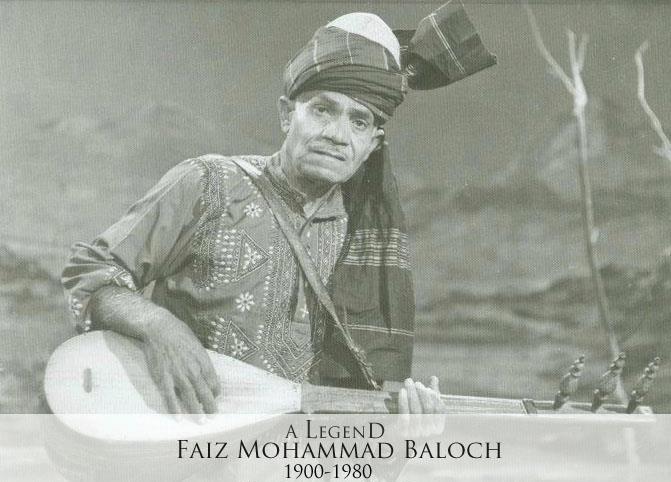
The Baloch: Faiz Mohammad Baloch


Name: Faiz Mohammad Baloch
Father Name: Sheer Mohammad Baloch
Born: 1900
Place of Birth: Qasar Qand (Iran)
Died: 1900-6th May 1980
Place of Death: Quetta(Balochistan)
Famous Songs: "Laila O Laila" & "Yeh Pakistan Hamara"

He Received the pride of Performance from the Govt. of Pakistan. He visited China, Russia, USA, Canada, Afghanistan, Germany, France, South Korea,Lebanon, Spain, Aljazire, & England.

He Visited most of the country with best price of honour, & expren his talent.Faiz Muhammad joined Radio Pakistan in 1948 regularly. He taught by Ustad Noori and Ustad Kher Muhammad(Mama Khero).

He also got education of Classical Music by Ustad Ramzan.

Wednesday, 5 September 2012

The Baloch: Mahnoor Baloch


* Mahnoor Baloch is one of the most beautiful and talented actress/model in Pakistani industry. She was born on 14th July, 1970.

* Mahnoor Baloch got married at the age of 15. Her husband Hamid was seventeen years old at that time.

* At the age of twenty, Mahnoor Baloch started her modeling career.

* In 1993, she entered Pakistani television industry with the drama serial Marvi

* In 2000, Mahnoor Baloch started directing and producing her own Drama serials. Her first serial as director was “Lamhay”. Lamhay drama series was highly appreciated by viewers. Pakistani well known pop singer Shahzad Roy was also in this serial.

* Mahnoor Baloch starts her caree in Hollywood also, her first movie is “Torn”

Mahnoor In Hollywood Movie: Tron