Showing posts with label Baloch Women. Show all posts

Friday, 16 January 2015

Words of change: Clearing the coast for the women of Balochistan


Quetta: Dressed in a colourful embroidered Balochi dress, 19-year-old Mariyam Suleman is a reflection of the deep blue sea that meets the shore of her hometown of Gwadar. Unassuming yet dynamic, the teenage social activist is making waves by creating awareness about the rights of women.

A college student and blogger, Mariyam is teaching women English in rural areas of Gwadar in order to give them an equal shot at opportunities. Doing what she does, that too in Balochistan–where proper education is a dream, takes unmatched resolve. And Mariyam’s determination, like the waters that besieges her land, is unwavering.

Mariyam started her endeavour after completing her undergraduate education from America. She recently conducted a workshop with the help of a non-profit organisation in Gwadar where over 30 college-going girls discussed women’s rights and swapped stories of influential Baloch women who changed society as they know it.

“I have not done a big thing, but I feel happy to do something for our society, specifically for the women in Balochistan who are denied access to education, not only because of cultural barriers, but also due to lack of resources,” Mairyam tells The Express Tribune.

She has also organised workshops focusing on tech camps in colleges, training of trainers, women’s day, cultural heritage and international day for girls’ rights.

“I organised a few workshops for college girls in Gwadar and have also been teaching English language along with maintaining my personal blog,” she says in a nonchalant manner that would have you think she is among many doing the same in her area. In fact, Mariyam is one of the first teenage girls to regularly write blogs about education and women issues in the province.

Elaborating on lack of opportunities, Mariyam says cultural barriers are a major issue. “They (girls) are married at a very young age. Sometimes they are forced to stay home rather than encouraged to compete with men out in the world. This is why, at times, they stop dreaming.”

Avenues for girls to pursue an education in Gwadar are extremely limited, even with the attention the coastal city has attracted in the past one decade. “Girls often bury their dreams because of lack of opportunities and cultural barriers.”

Yet, the women of Balochistan are aware of their rights. Mairyam said girls at several workshops have voiced one concern repeatedly: ‘Men should be taught about women’s rights, not women.’

Mariyam’s blogs can be viewed here.

< Express Tribune >

Sunday, 21 December 2014

In Pictures: Annual Convocation Day ceremony of Balochistan University

Balochistan Governor, Muhammad Khan Achakzai and Balochistan Chief Minister Dr Abdul Malik Baloch award degrees to students during the Annual Convocation Day ceremony of Balochistan University.


Saturday, 5 April 2014

In Pictures: Women Participation in Balochistan Sports Festival

Balochistan Sports festival began on March 22 with competitions in 27 various sporting activities, as many as 2,274 players took part in these competitions and 451 females were also part of these games and exhibited talents at their best.


Saturday, 29 March 2014

2,000 girls schools to be inaugurated in Balochistan


QUETTA: The Balochistan government has made prominent move for promoting education as announced to establish 2,000 girls schools across the province.

Girls schools will be established in remote and backward areas of the Balochistan province by the funding of 34 million dollars by United Nations International Children’s Emergency Fund (UNICEF) and Global Partnership .

The Chief Minister Balochistan’s advisor on Education, Sardar Raza Muhammad Bareech said that for this purpose a plan has already been developed with the financial and technical support of UNICEF other organisation to deliver educational facilities to all the students of province.

Other various organizations and donor agencies have permitted the Balochistan Education Sector Plan to deliver quality of education, he added.

Moreover, 300 primary and middle schools will be upgraded under new plan; while around 2.3 million children are deprived of educational facilities in the province.

The completion time of the projects has been estimated within 3 years while the schools will be built within 2 kilometres of each other.

According to Balochistan government’s official, UNICEF is also working on other plans like Human Resource Information Data, Education Management Information System and Geological Information System of Balochistan Education Department.

< The News Tribe >

Wednesday, 19 March 2014

The Baloch: Jawahir Habib -- Leading from the front


Quetta: Her body language has an air of unmistakable confidence. Dressed in her traditional, hand-embroidered Balochi dress, Dr Jawahir Habib has defied many norms. She is one of the marginalised province’s unsung female heroes who have dared to dream.

Habib, 28, who works as communication development specialist in Unicef’s Balochistan chapter, believes that cultural barriers and a lack of resources are responsible for the lagging behind of women in Balochistan.
“Opportunities for women are rare in Balochistan where the literacy rate is around 20 per cent, comparatively lower than the rest of the country,” says Habib who belongs to the tiny town of Killi Mengal in Naushki, a district that shares border with Afghanistan and is about 130-kilometres from Quetta.

Habib was one of the 55 Pakistani recipients of the 2013 Australia Awards. These awards are an important component of Australia’s investment in education. She came back from Australia after completing her study with a mission to give back to the community.

“It is hard to find any woman in a leadership role as society is still not completely ready to accept the women as a boss issuing directives,” says Habib.

Explaining how the culture barrier affects literacy and in turn women’s empowerment, Habib says that because there are not enough separate schools for girls and boys, parents do not allow their daughters to attend school. “Parents think it will destroy the culture. Schools in Balochistan are far from their towns because human settlements are scattered.”

Habib has a degree in dentistry but she decided to switch to public health since she believes serving in preventive medicine is more useful for the community than curative medicine. She is currently engaged in routine immunisation and maternal health in Balochistan. “Health and education are in a precarious condition in the province. I believe the reason is a lack of access to resources,” says Habib.

“I faced opposition from relatives while going to Karachi to study dentistry at Hamdard University but my father, an engineer, supported me. I even went to Australia which is uncommon for females in Balochistan,” she adds.

For her, working on the polio programme has been a good experience as it provided her an opportunity to learn more about society. She had to go door to door to persuade parents to administer polio drops to their children. “Facing resistance is common. Even male family members do not allow us to talk to their females. They think we are spoiling or corrupting them as part of a conspiracy. It is just because of the lack of education and awareness,” she says, adding that northern areas of the province are more conservative than the rest of the province. “Districts like Naushki, Turbat, Panjgur and Gwadar are more open and accept female education.”

According to the Pakistan Demographic and Health Survey (PDHS), Balochistan has the highest mortality rate where 785 children die per 100,000 live births. Most children die from infection, diarrhoea and pneumonia. Only 29 per cent women are assisted by skilled birth attendants whereas merely 16 per cent children are fully immunised against nine vaccine-preventable diseases. “We may have basic health units but people do not have resources to get to these units as in rural areas the population is scattered and 70 per cent live below the poverty line. We do not have female workers and campaigners to underscore these problems,” says Habib, concerned about the state in Balochistan.

About harassment at office and during field work, Habib says it is a big problem. “I encountered harassment most frequently but I am a straightforward person,” she says, adding that if and when men talked in an inappropriate way and she felt harassed, she just told them that she did not like it.

“People think the right place for women is the kitchen and their job is just bringing up children. Men need to understand and accept women as leaders and masters of their professions,” she says, adding that this change in paradigms will take time.

She points out that there is no female minister in the cabinet of Balochistan government. “Rise in female representation will change the mindset of people. In the beginning, I was criticised for working and studying abroad but over time it was accepted,” she says. “Balochistan is rising and we women are hopeful that we will contribute.”

< Express Tribune >

Thursday, 16 January 2014

200 jobless female youth of Balochistan to be trained

File Photo: Vocational Training Centre established by Pakistan army in Balochistan

Islamabad—Hunnar Training and Entrepreneurship Training Center for Females, Quetta would provide free vocational training to 200 hundred jobless female youth of Balochistan under Prime Minister’s Special Initiative for Hunarmand Pakistan Programme.

Vocational Training would be imparted in five trades including Beautician, Cooking, Tailoring, Handicraft and Fabric Oil Painting.

The programme would be sponsored by Regional Office National Vocational and Technical Training Commission Quetta, said a news release issued here.

The female youth possessing middle or Matric qualification can apply for the six-months vocational training in different trades.

A stipend worth Rs. 2,000 will be paid to the trainee per month on ensuring minimum 80% attendance.

Tool Kits of Tailoring and Beautician trades will be provided free to successful trainees at the end of the course.

For providing maximum convenience to the desirous candidates, classes have been arranged both in morning and evening shifts.

NAVTTC Headquarters Islamabad is trying its level best for bringing reforms in Technical and Vocational Education and Training (TVET) according to the demand of national and international labour markets.

Spokesman of NAVTTC said that more skilled people will ensure more economic prosperity in the country.

Therefore NAVTTC Headquarters and its Regional Offices are ensuring timely execution of vocational training programs for jobless youth throughout the country under the Prime Minister’s Special Initiative for Hunarmand Pakistan, he added.—APP

< Pakistan Observer >

Monday, 13 January 2014

Youth forum: Baloch students exhibit talent, compassion

Chandan Syed

The narrative of the vast and unwieldy Balochistan is largely tendentious; those beyond the peripheries of the province can barely imagine the daily grind of life in Quetta or its precarious neighborhoods, for lack of access or opportunity for outreach.

A modest group of Baloch students exhibited not just the talent and compassion of the province’s youth but also its ambition to fight a landscape of terror and invisibility with the hope of rousing change.

Chandan Syed, a 21-year-old fine arts student at Balochistan University, was one of three young women engaged in a workshop and subsequent forum facilitated by Insan Foundation Trust (IFT). The project aimed at using media and art as a tool to promote the rights of women and minorities.
Chandan defies all stereotypes, wearing a confident smile and posing for pictures in front of her painting of a woman being pulled by strings.

“I have had tremendous support from my family to pursue what I want, but this is not true for most women around me,” she explains that while her home-town is a lot more nuanced than it is portrayed as in the media, it remains a difficult terrain for women.


Howra Batool’s installation is the perfect illustration of this: a woman in a black burqa is crouched between garbage bags, blending into nonexistence. For the 20-year-old artist who belongs to a minority sect, women who wish to be elastic and to grow out of their traditional roles are stilted because of the prevalence of family honour and ‘pardah’.

“Our lives are marked with uncertainty,” Howra, who has to take two rickshaws to reach the university, where she is in the first year of the fine arts programme, expresses her ambivalence at the lack of opportunity within the province. “The university has been shut for the last month because of strikes and the unavailability of transport so I just paint in my basement.”


Muhammad Sadiq, who is finishing off a degree in journalism, views the platform as a kind of mirror, to reflect all that is good, bad, true and false within a landscape that he intrinsically loves but wishes to progress. As an intern at a local news station, Sadiq describes the challenges of working within fearful circumstances.
“Every article is met with threats and for every assignment I go to cover, my family is holding their breath,” explained the vivacious 24-year-old, who feels that the media at large has little stake in the region, and is by force of circumstance unable to portray a wholesome picture.

Around 40 students from Peshawar University, Karachi University, Lahore College for Women University, and Islamia University Bahawalpur participated in the forum and were trained earlier this year to use media and art as an expression for gender, religious and ethnic equality.

According to ITF Dirctor Kishwar Sultana, respect, equality and peaceful coexistence without any discrimination on the basis of gender, class and creed are at the forefront of youth education and must be included as part of their development and expanding sensibilities.

“Our students are very talented but rarely have the opportunity to broaden their horizon and be encouraged outside of their immediate environs,” expressed Ambreen Hassan, a faculty member at the Balochistan University.

< Express Tribune >

Thursday, 2 January 2014

The Baloch: Samiyeh Balochzehi -- First Elected Sunni woman Mayor of Iran


The election of the first Baluchi woman last week as the mayor of Kalat, a city in the south of Iran, was an unprecedented event in one of the most underprivileged and conservative provinces in Iran. It is a significant step which local experts believe that can inspire Baluchi women to work for more rights and break boundaries that have been created by both the state and society.

Samiyeh Balochzehi, 26, who was elected mayor by the Kalat city council, is an engineer and has a master’s degree in natural resources management from the Islamic Azad University Science and Research Branch in Tehran. A local who spoke to Al-Monitor on condition of anonymity said that Balochzehi is a widow, that her sister is on the city council and that she comes from a wealthy and influential family.

The five-member city council voted unanimously for Balochzehi. The significance of the election was not lost on the president of Kalat’s city council, who, according to a local website, Baluch Press, said, “The election of a Baluchi woman can encourage local women. This could be an opportunity for all those who are, in spite of their qualifications, isolated from society.”

Electing a female mayor is by itself a very rare event in Iran. Female mayors who are Shiite and come from the majority Persian ethnicity are extremely rare, but electing a female mayor from two distinct minority sets in Iran, the Baluchi and the Sunnis, is unprecedented.

The province of Sistan-Baluchistan is situated in southeastern Iran and at 187,502 square kilometers [72,395 square miles, roughly the size of Washington state] is Iran’s largest province. From the north of the province to the city of Zabol (famous ancient city) is the region of Sistan, whose population is mostly Persian-speaking and Shiite. The Baluchi people, who speak Baluchi and are Sunni, populate the area between Zahedan and Chabahar, in the south of the province. Of the 2.6 million inhabitants of the province, approximately 65% are Baluchi.

This province has historically suffered from political repression, economic deprivation, and has witnessed violence through terrorism from extremist Sunni groups and drug smuggling.

According to the head of the Literacy Movement Organization of Iran, in an interview with the Ghanoon newspaper, the province of Sistan-Baluchistan has the worst literacy rate for those ages 10 to 49 in Iran. The province also has the highest number of married girls under the age of 15. According to the 2013 demographic report, in Tehran only 0.8% of girls under the age of 15 are married. In Sistan-Baluchistan, however, the number is 2%.

The city of Kalat stands out as being a particularly traditional and conservative area in Iran, with many societal restrictions on women. Also, according to the Criminology Center of Tehran University, there is a high level of violence against women in Sistan-Baluchistan.

However, it appears that Balochzehi has overcome these barriers. One of her acquaintances who spoke to Al-Monitor said that Baluchzehi is not like most woman from Kalat. “She only knows how to make spaghetti and that is because as a student she has lived away from home for a long time,” the acquaintance said, attempting to demonstrate how Balochzehi has ignored the traditional role of women in society. The acquaintance credits the support of her wealthy and influential family in allowing her to break with tradition. “Her father is an admirable man. When his daughters were going to school, they had his complete support.”

The support of her family will be necessary if Balochzehi is to be successful. Based on the information gathered by Al-Monitor, the municipality of Kalat, which is to be directed by Balochzehi, has no female employees. There are 16 men working at the municipality; five of them are full-time employees and the rest are part-time.

A Baluchi university professor told Al-Monitor, “This young lady will have a difficult time given the conservative and patriarchal atmosphere of the city of Kalat and the all-male staff of the municipality. But she is lucky since, because of her father, she has powerful and influential supporters such as the local clerics and community elders.”

This Baluchi citizen also believes that the new mayor has a tough road ahead: “People of that region are very conservative, especially when it comes to women. I cannot stress that enough. It is the most conservative city in Baluchistan. For example, until just a few years ago many would not allow their daughters to attend university. But thankfully the situation is improving.”

The armed Salafi supporters of al-Qaeda, such as Jaish al-Adl, which is a branch of Jundallah, are also active in Baluchistan. From time to time there are bloody conflicts between these groups and the Iranian armed forces. These armed groups, because of their radical religious conservatism, are strongly opposed to the idea of women as active members of the public sphere.

One of Samiyeh Balochzehi’s friends, however, says that the new mayor will not back down. She told Al-Monitor, “I asked her if she thinks she can succeed given the male-dominated environment that she has to work in. She responded that she does not doubt her own abilities.”

According to local Iranian media, in her introduction ceremony, Balochzehi laid out some very modest goals. She said that she would focus on “building parks and recreational centers for woman and children” in addition to other restoration and renovation projects.

Even if Baluchzehi is not successful in her endeavors as mayor, however, a sociologist in Tehran who specializes in woman’s issues told Al-Monitor that Balochzehi’s new position may have a symbolic impact that can open doors for other woman. “It will help break taboos for women,” the sociologist told Al-Monitor. “It will give them confidence. Baluchistan is very conservative, but we should remember that after the revolution and the Islamization of schools, more families were willing to let their children attend school and university. People like Samiyeh encourage the other educated girls to become active members of society instead of staying at home.”

< Al-Monitor >

Sunday, 20 October 2013

Balochistan girl scores top grades in ‘O Levels’


QUETTA: A girl student of Balochistan got five A*s (90 per cent or more) and three As (between 80pc and 89.9pc) in this year’s O Level examinations given by the University of Cambridge, it was learnt on Sunday.

Rafia Durrani, a student of the Iqra Army Public School, Quetta, may be the region’s top-scorer for the examinations.

According to the information released by the British university, Rafia secured A*s in English language, mathematics, physics, chemistry and Urdu. She secured As in biology, Islamiyat and Pakistan studies.

< Dawn >

Monday, 3 June 2013

11 women get on Balochistan Assembly reserved seats

File Photo: Dr. Fozia Marri as the first ever Deputy Speaker of the Balochistan Assembly,

QUETTA  - Election Commission of Pakistan has announced the names of candidates of different parties elected on 11 women and 3 minority seats in Balochistan Assembly, on Tuesday.

According to ECP notification, Kiran Haider, Samina Khan and Rahila Durrani of Pakistan Muslim League-Nawaz, Sipozmay Achakzai, Masuma Hayat and Farzana of Pashtoon Khwa Milli Awami Party, Yaseen Lehri and Shahma Ishaq Baloch of National Party, Shahida Rauf and Hussan Banur of Jamiat Ulema-e-Islam (F) and Ruqia Hashmi of PML-Q have been elected members of Balochistan Assembly on women reserved seats. Similarly, on minority seats, PML-N’s Santosh Kumar, PkMAP’s William Barkat and Andrew Maseh of NP have been elected members of Balochistan.

After the notification, PML-N’s seats increased to 18, PkMAP’s 14, NP’s 11, JUI-F’s 8 and PML-5.

< The Nation >

Wednesday, 2 January 2013

The Baloch: Noor Sbaah


نور صباح رخشانی ۔۔۔ایک ماں ۔۔ایک میڈیکل ڈاکٹر اور جانز ہاپکنز یونیورسٹی کے سکول آف پبلک ہیلتھ سے پی ایچ ڈی کرنے والی ایک ایسی پاکستانی ڈاکٹر ہیں۔ جن کا تعلق بلوچستان کے شہر کوئٹہ سے ہے۔ نور صباح  اپنی دو بچیوں کے ساتھ پی ایچ ڈی کرنے امریکہ  آئیں اور اب پاکستان واپس جاکر صحت عامہ کے شعبے کو بہتر بنانے کے لئے کام کرنا چاہتی ہیں ۔ نور صباح  نے بالٹی مور کی جانزہاپکنز یونیورسٹی سے پہلے پبلک ہیلتھ میں ماسٹرز اور پھر پی ایچ ڈی مکمل کی ہے۔
نور صباح کہتی ہیں کہ دو بچیوں کی پرورش کے ساتھ ایک  انتہائی اہم   امریکی یونیورسٹی سے پی ایچ ڈی کرنا آسان نہیں تھا۔
“جب میں پا کستان سے یہا ں آ رہی تھی،  تو مجھے خود بھی بہت مشکل لگ رہا تھا۔ لیکن الحمدللہ سب کام بخوبی ہو گئے ۔۔کچھ عرصہ کے لئے  میرے شوہر اورمیری امی میرے ساتھ رہے ۔ سب سے بڑی با ت  امریکہ کا  سکو ل سسٹم بہت بڑا سہاراہے۔ میرے دونوں بچے  پبلک سکو ل جا تے ہیں ۔ پبلک سکو ل میں کو ئی فیس نہیں  ہوتی ۔مجھے بالکل فکر نہیں ہوتی کہ ان کی پڑھائی کیسے ہو رہی ہے۔ملنے جلنے والوں اور ساتھ کام کرنے والوں سے بھی کافی مدد مل جاتی ہے ۔  سکو ل کے باقاعدہ گھنٹے ختم ہونے کے بعد آفٹر سکول پروگرام ہوتے ہیں، جہاں  بچے چھ بجے شام تک رہ سکتے ہیں۔ آ فٹر سکول پروگرام کی کم سے کم 50 ڈالر کی فیس ہے۔ان سے آپ نے پہلے سے معاہدہ کیا ہوتا ہے کہ ہفتے میں ایک دن یا دو دن  بچے آفٹر سکول پروگرام میں شام چھ بجے تک رہ سکتے ہیں۔ ان کو ہوم ورک اور  لنچ کرایا جاتا ہے، دیگر سرگرمیاں بھی ہو تی ہیں۔ تو اکثر جب میری  شام کی کلاسیں ہوتی ہیں یا  مجھے کسی کام سے با لٹی  مو ر شہر سے با ہر جانا پڑتا ہے  تو میری بچیوں کے سکول سے بہت مدد ملتی ہے ۔‘‘
شروع میں  ایک سال کچھ مشکل تھا ،کیونکہ کورس ورک ذرا زیادہ  ہو تا ہے۔ اس کا سہرا جانز ہاپکنز  سکو ل کی انتظا میہ کو جاتا ہے کہ جانز ہاپکنز  میں اور  امریکہ کی دوسری یونیورسٹیز میں بھی پڑھنے کے عمل میں  کوئی سختی نہیں ہوتی کہ آپ نے فلاں  کورس اسی سال اور اسی ٹرم میں لینا ہے۔میرے پاس چار سال تھے۔ میں نے چا ر سال میں اپنا کورس پھیلایا ۔ میری پی ایچ ڈی ایڈوائزر نے مجھے اچھے مشورے دیئے ۔ میری ایڈوائزر کو معلوم ہے کہ  میرے  چھوٹے بچے ہیں ۔  جب میری اپنی ایڈوائزر  کے ساتھ میٹنگ ہوتی ہے ، تو سب سے پہلے بچوں کا حال چال پوچھتی ہیں  ۔ اسطرح سے یہ فا ئدہ  ہوتا ہے کہ آپ اپنا کورس ورک اپنی مرضی سے منتخب  کر سکتے ہیں ۔ میں نے چار سال میں اپنے 120 کریڈٹ آورز مکمل کرلئے ہیں۔‘‘
’’یہاں آن لائن کورسز بھی دستیاب ہیں ، بلکہ اب تو ریسرچ کے زیادہ تر وسائل اور لائبریری کے میٹیریل تک  رسائی بھی آن لائن ممکن ہے۔ تو کچھ کورسز میں نے آن لا ئن کئے ۔ اگر کو ئی آرٹیکل یا کتاب درکار ہو ، تو وہ آن لائن مل جاتی ہے۔یعنی   ٹیکنالوجی کا بہت فائدہ ہو رہا ہے ۔  مجھے کو لیگز کے ساتھ اگرمیٹنگز کرنی ہوں تو میں آن لائن کانفرنس کال سے کر لیتی ہوں ۔ میرے بچوں کے ساتھ پڑھنے والے دوسرے بچوں کی مائیں بھی میری بہت مدد کرتی ہیں ۔ اگر کبھی  مجھے سکول میں دیر ہو جائے ، اور میں انہیں سکول سے بروقت نہ لے سکوں ، تو کسی نہ کسی بچے کی والدہ میرے بچوں کو سکول سے لانے، لے جانے میں مدد ضرور کرتی ہیں۔‘‘
 نور صباح کہتی ہیں کہ انہوں نے امریکہ میں سب سے اہم جو چیز سیکھی ، وہ یہ کہ یہاں  نا ممکن کا لفظ نہیں ہے ۔آپ یہ نہیں کہہ  سکتے کہ کوئی کام نہیں ہو سکتا ۔ یا یہ تو  آپ نہیں کر سکتے۔میں نے اپنی میڈیکل کی ڈگری ،اپنا ایم بی بی ایس پا کستان سے کیا تھا ، لیکن  اپنی شادی اور بچوں کی پیدائش سے پہلے ۔ بچوں کے بعد مجھے لگتا تھاکہ  اب میں آگے نہیں پڑھ سکوں گی ۔ لیکن جب آپ امریکہ میں آتے ہیں ، تو آپ کو اندازہ ہو جا تا ہے کہ ناممکن نام کی چیز یہاں نہیں ہے۔اگر آپ کے پاس کوئی لگن ہے یا آپ نے کو ئی ارادہ کیا ہے تو ہر طرف سے آپ کی مدد ہو جا تی ہے۔اور آپ اپنا کا م مکمل کر لیتے ہیں ۔ اور میرے اپنے بچوں کو بھی ہم نے یہی چیز سکھائی ہے  کہ فلاں کام نا ممکن ہے ۔ اگر ہم چاہیں تو ہم ہر کام  کر سکتے ہیں ۔اور یہی چیز  میرے بچے اپنے ساتھ پا کستان لے کر جائیں گے۔‘‘
نور صباح کی پی ایچ ڈی کی ڈگری پبلک ہیلتھ میں ہے ۔ ہیلتھ کئیر مینجمنٹ یا صحت عامہ کے شعبے کا انتظام نور صباح کی پی ایچ ڈی ریسرچ کا خاص موضوع ہے ۔ جس میں دیکھا جاتا ہے کہ اپنے ملک کی صحت عامہ سے متعلق پالیسیاں کیسے بہتر بنائی جا سکتی ہیں ۔ نور صباح کا پی ایچ ڈی کا تھیسس بچوں کی ویکسین پروگرام کو بہتر بنانے کے بارے میں ہے ۔جس میں دیکھا جا رہا ہے کہ پالیسی کیسے بہتر انداز میں کسی ملک کے کام آسکتی ہے ۔
نور صباح کہتی ہیں کہ پاکستان میں عوام کے پاس اپنی صحت کو بہتر بنانے کے لئے معلومات  کی کمی  ہے ۔ غربت کی وجہ سے صحت کا شعبہ سب سے زیادہ نظر انداز ہوا ہے ، جنہیں حکومت کی توجہ کا مرکز ہونا چاہئے ۔۔کون سے ایسے پروگرام شروع کئے جائیں  ، جو ماؤں اور بچوں کی صحت بہتر بنانے میں مددگار ثابت ہو سکیں ۔ جن سے ان میں اپنی صحت کے بارے میں آگاہی بڑھائی جا سکے ۔ایک اور اہم چیز صحت عامہ کے شعبے کا معیاری ہونا ہے ۔ جس کے لئے پاکستان میں کوئی مخصوص پالیسیاں طے نہیں کی گئیں ۔ جب تک پالیسی درست نہیں ہوگی ، علاج معالجے کی معیاری سہولتیں مہیا نہیں کی جا سکتیں۔
نور صباح کہتی ہیں کہ کلینیکل سائنس میں مریضوں کے ساتھ معالج کا براہ راست رابطہ ہوتا ہے ۔ لیکن فل برائٹ پروگرام کے تحت  کلینکل سائنس کے کسی مضمون میں اعلی تعلیم حاصل کرنا ممکن نہیں ۔اس لئے میری پی ایچ ڈی ریسرچ  پالیسی اور منیجمنٹ سے متعلق ہے ۔ نور صباح کہتی ہیں کہ پاکستان میں بہت ذہین ڈاکٹرز موجود ہیں ۔ جو بہت اچھا کام کر رہے ہیں ۔ لیکن جب آپ پاکستان میں صحت کی صورتحال کو دیکھتے ہیں ۔ تو یہ کہنا پڑے گا کہ صحت کے شعبے میں ریسرچ کرنے والے فل برائٹ سکالرز جب پاکستان واپس جائیں گے ۔تو اپنی معلومات کو پاکستان میں شعبہ صحت کی بہتری کے لئے استعمال کر سکیں گے۔


Friday, 16 November 2012

Baloch girls break a taboo


File Photo: Students of Sardar Bahadur Khan Women’s University,Pakistan’s third Women’s University

TAXILA, : For Shazia Bugti, her conservative background will not become a hindrance to achieving her goal — to become a CSS officer.

“It is my dream to become an officer and serve my people to get them out of deprivation and extreme poverty”, said the Grade 10 student while talking to this reporter at Heavy Industries Taxila Education City (Hitec).

It was hard to believe that the young girl with bright eyes and confident look belonged to remote and far flung area of Balochistan where for woman getting education is considered a sin.

Shazia Bugti is among 187 students who are getting education at this prestigious institution under federal government development programme for Balochistan and Fata.

As hopes of bright future sprouting in her eyes she said that most of the schools in her area are closed due to lack of staff and other facilities, besides uncertainty in the area. As a result of which the doors of education are closed especially for girls.

Sila Khan, another girl belonging to Lora Lai area of Balochistan, is the youngest among the Baloch students studying at Hitec and is living in the hostel.

She said she felt sad when she left her parents but the motivation of becoming an educated and well groomed youth of Balochistan overcame her sadness.

She said that she was lucky to be selected for studying at Hitec as it would change the fate of not only her community but the whole tribe.

Sumreen, a girl from far flung and remote area of Barkhan District located in the north-East of the Balochistan province said that it was first time that she came out of her district.

She said that the Hitec had given her confidence and power to speak. She said that now during short span of time she was able to fluently speak Urdu and English.

She praised the idea of equipping Baloch youth with quality education so that they could become an agent of change for Balochistan.

Rashida from Naseerabad, daughter of a small farmer, while talking to this reporter said that selecting students from remote and less developed areas and bringing them into a mainstream was a laudable idea of the present government which would remove sense of
deprivation among them.

Brig (retired) Taj Iqbal, Hitec administrator said that the education city was providing quality education under a team of dedicated and professional educationists.

He said Hitec was ready to accommodate more students from Balochistan.

< Dawn >

Tuesday, 6 November 2012

30 HEC scholarships awarded to female faculty from Balochistan


ISLAMABAD - Under faculty development program of Higher Education Commission (HEC), 30 scholarships have been awarded to the female faculty of Sardar Bhaudar Khan Women University (SBKWU) Quetta, the first Women University of Balochistan. According to the details, MS leading to PhD and PhD-level scholarships have been awarded in three categories: overseas scholarships, split and indigenous scholarships. The awarded scholarships would cover various disciplines i.e economics, mathematics, computer Science, management science, botany and zoology etc.

Addressing special scholarship award ceremony, the Vice Chancellor of SBKWU Ms. Sultana Baloch congratulated the scholarship awardees and lauded the efforts of HEC for undertaking a number of initiatives to increase access to higher education in Balochistan province. She was of the view that faculty development program has been greatly helpful in strengthening the capacity faculty of SBKWU in all areas.

She also informed that through new phase, 30 more scholarships would be awarded soon in various disciplines. She also appreciated the transparent selection process which enabled the capable and deserving candidates to get an opportunity to enhance their knowledge at the leading higher education institutions of academically advanced countries. Earlier Mr. Wasim Hashmi Syed, Project Director and Focal Person HEC conducted orientation session with SBKWU scholars and provided them the guidelines of the HEC scholarships policies and assist them to secure admission in HEC recognized international Universities.

Since its inception, HEC has paid special attention towards promoting higher education sector in the Balochistan province. The main initiatives include special scholarship schemes for the faculty and youth of Balochistan, implementation of federal government’s quota policy in award of local and foreign scholarships, establishment of well-equipped HEC regional centre at Quetta, number of universities has been increased from 2 to 7 including first women university of Balochistan and launched special projects for the development of basic infrastructure at higher education institutions of the province including labs, class rooms, seminars rooms, labs, transport facilities, digital libraries, video conferencing facility etc.

HEC has already awarded 2,000 scholarships to students of Balochistan and FATA under the project “Provision of Higher Education Opportunities for Balochistan & FATA” during the last four years. Under second and new phase of the project, 1500 more scholarships would be awarded to the students of Balochistan and FATA. HEC has also arranged foundation course for 684 students of Balochistan at Quetta. To date 66 scholars have completed their studies and among these 7 scholars from Balochistan have shown outstanding performance and have clinched gold medal from leading Universities of country i.e. COMSATS, NUST, GC University Lahore and University of Balochistan.

Recently, 600 Masters leading to PhD scholarships for the natives of Balochistan province have been announced under the “Aghaz-e-Haqooq-e-Balochistan Package” with a cost of Rs. 3,138.692 million. The project is focused towards providing opportunities for access to higher education to financially constrained youth of Balochistan, who despite possessing academic merit are unable to continue their further studies. The offered scholarship would cover tuition costs, accommodation and living expenses of the selected candidates.

< Pakistan Today >

Tuesday, 2 October 2012

First female scholar from Balochistan completes PhD


File Photo: Convocation of Buitems Quetta

The first female scholar from Balochistan University of Information Technology and Management Sciences (BUITMS), Quetta, Sarwat Afridi, has completed her PhD from France under the Higher Education Commission (HEC) scholarship scheme.

Sarwat has completed her PhD from Université Aix-Marseille II, France. In 2008, Sarwat was awarded HEC overseas scholarship for France. From June 2008 to August 2008, she completed an intensive French language course for two months at ILCF (Institut de Langue et de Culture Françaises / Institut Catholique de Paris), France. In September 2008, Sarwat was registered in PhD at Université Aix-Marseille II, France, under the supervision of Professor Dr Pascal Rihet.

She completed her PhD in July 2012 titled “Influence of candidate gene variants on Plasmodium Falciparum Malaria related phenotypes and functional effects of NCR3-412 polymorphism associated to Malaria.” During her PhD, she worked on diverse projects related to genomics, bioinformatics and biochemistry. The main focus of her research was genetic analysis of resistance to malaria.

The overall objective of her work was to identify genes, which are involved in resistance or susceptibility to malaria in humans, and to identify human genetic factors which have been previously associated to resistance to malaria and have the tendency to influence the level of malarial antibodies thus ultimately leading to protection against malaria. Moreover, she also worked on functional evaluation of NCR3 polymorphism, previously associated to Malaria. All the results obtained help illustrate the contribution of bioinformatics, genetics and genomics in understanding the mechanism involved in resistance to human Malaria. During her PhD research she managed to publish three articles in international journals while two are under process of submission. She also presented her research work in the form of poster in two institutions. She has successfully graduated and returned to Pakistan and have rejoined her parent university.

The Higher Education Commission (HEC) is also planning to award 600 Masters leading to PhD scholarships for the natives of Balochistan province. The government has recently approved the project under the “Aghaz-e-Haqooq-e-Balochistan Package” on August 30, 2012.

< The News >

Wednesday, 5 September 2012

The Baloch: Mahnoor Baloch


* Mahnoor Baloch is one of the most beautiful and talented actress/model in Pakistani industry. She was born on 14th July, 1970.

* Mahnoor Baloch got married at the age of 15. Her husband Hamid was seventeen years old at that time.

* At the age of twenty, Mahnoor Baloch started her modeling career.

* In 1993, she entered Pakistani television industry with the drama serial Marvi

* In 2000, Mahnoor Baloch started directing and producing her own Drama serials. Her first serial as director was “Lamhay”. Lamhay drama series was highly appreciated by viewers. Pakistani well known pop singer Shahzad Roy was also in this serial.

* Mahnoor Baloch starts her caree in Hollywood also, her first movie is “Torn”

Mahnoor In Hollywood Movie: Tron

Thursday, 7 June 2012

10 million Dollar Grant for Women Education in Balochistan


File Photo: Pasthoon Khwa student Organization gathering

Chief Minister Balochistan‚ Nawab Muhammad Aslam Khan Raisani has approved ten million dollars grant for promotion of women education in the province

A statement issued by provisional govornament says the grant will be released through Multi Donors Trust Fund by World Bank. According to the project‚ shelter less primary and middle schools will be constructed in various districts of Balochistan.

Moreover necessary facilities would also be given in already established schools of the districts.

The project which will be implemented by provincial education department will also setup primary co-schools for both girls and boys with the collaboration of native population.


<Radio Pakistan>

Friday, 25 May 2012

Balochi Dress for Women


By: Samia Batool, Quetta

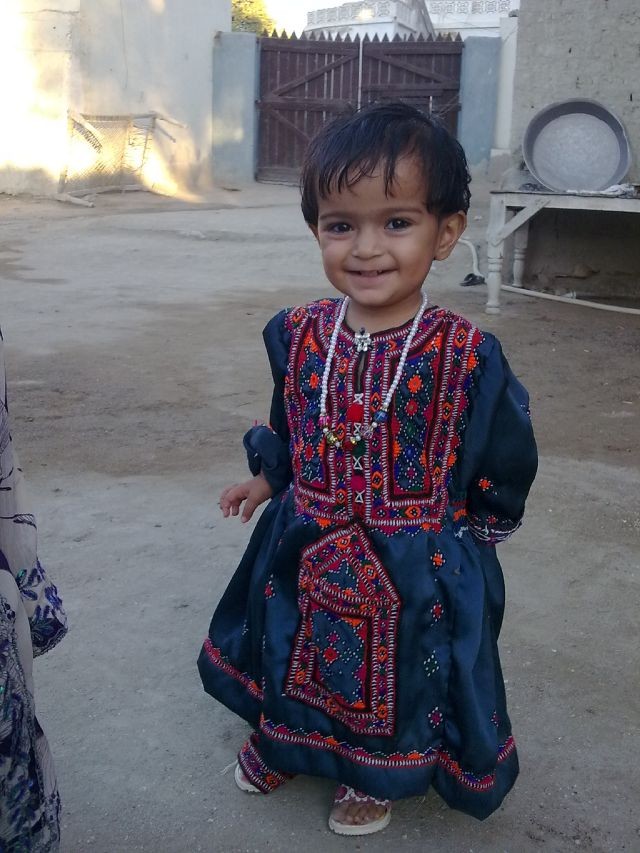
Balochi Dress for woman is one of the beautiful cultural sides of Balochistan. The Balochi Dress is attractive, in fashion, classic and very rich that a woman from any part of world can’t deny wearing it. Balochi dress is called “phashik” in Balochi language.

It has heavy embroidered sleeves and borders. It has pockets which are in triangle shape. This triangle shaped pocket is sewed with Daman and lots of beautiful embroidery is done on it too. Balochi dress is unique since the embroidery work on it leads you to unique taste of art in Baloch. The patterns, the designs of Balochi dress are unique and eye catching that you can’t find that type of embroidery work in other cultural dresses.

In making of Balochi Dress glass, multiple colored threads and a fabric is used. This fabric can be anything of your choice but usually cotton, silk and Jorchad is used. Talking of appealing colors in Balochi dress, let us tell you that red, green, black, yellow and blue are the most commonly used colors in making of Balochi dress, but as due to requirements of design, the Balochi dress can be consisted of countless colors. Their combination will definitely take one’s heart away.

Balochi dress is very dynamic since they vary area to area. Like in Balochistan if a Baloch woman wears balochi dress with out embroidered borders then she is thought to be a widow. The happily married balochi women wear balochi dress with heavy, rich and bright colored embroidery not only on border but on sleeves too. You will amazed to know that this phenomena is not observed in Balochs of Iran, there even a married woman can wear a Balochi dress with out any heavy embroidery on borders.

X-Federal Minister Zubaida Jalal in Balochi dress
Balochi dress is no doubt an apple of eye for any fashion designers since there is lot of space to make it more beautiful and up to date. Like till date Balochi dress embroidery is done in many mediums, depending on its medium of embroidery many new designs are introduced or they existed before but revealed again they are kundi, bugti and Sheeshay wala kam(the embroidery with glass).

Balochi dress as time passes changes itself .The balochi dress with pockets are preferred to be worn in sui and bugti but in Quetta, modern Baloch Girl would like to wear balochi dress without pockets.

The balochi dress is very beautiful and adorable and hence it takes lots of money and time to be prepared. Its price ranges from few hundreds to thousands. An average balochi dress takes 7 to 8 months to prepare since this is one of the unique hand-made dress.

So, if you are fond of experiencing the various cultures and their customs, then get started with balochi dress. This Historic, rich dress will take you as it part.

<Balochi Linguist>

Thursday, 26 April 2012

The Baloch: Future Leaders- Mariyam Suleman


Mariyam Suleman from Gowadar, Baluchistan,She is studying under the State Department Yes Program. In culture programme of Community presentation, She got second position. Mariam plans to write a book in Balochi language on her experiences in the US.

VOA Report:


Thursday, 8 March 2012

Women Day Special: Sardar Bahadur Khan Women’s University Balochistan


Balochistan has the privilege to house the Pakistan’s third and Balochistan’s first Women’s University at Quetta. The need for a women’s university in Balochistan was felt for many decades. This need was finally realized when the Governor of Balochistan, Mr. Owais Ahmed Ghani, promulgated an Ordinance No. 1 of 2004 to establish the Sardar Bahadur Khan Women’s University in Quetta. On 26th August 2004 Balochistan Provincial Assembly passed The Sardar Bahadur Khan Women’s University Act.

The university has been established in Sardar Bahadur Khan Sanatorium very generously donated by the Pakistan Railways without any compensation. The premises of the university is spread over 40 acres. Keys of the building were handed over to the Vice Chancellor on 18 March 2004 , the building was witness to a historic transformation where it was given the status of Balochistan 's first , and Pakistan 's Third women 's university. From that day onwards , the Sardar Bahadur Khan Women's University  of Balochistan has been striving to provide a haven to the women of Balochistan and Pakistan who are interested in educational and intellectual pursuits. The official key handing ceremony was held in the auditorium  on  the  university premises.

Masters level classes began in a record period of 59 days with an initial enrolment of 103 students in 9 disciplines. Currently, young women coming from all over Balochistan are studying in 13 disciplines working for their masters and bachelors degrees. Quality education in English is being imparted following the semester system. Fourth session at the university is in progress. First batch of 80 students has graduated in July 2006. The university has a total enrolment of over 1000 students and it is increasing in every new session.

< University official Site>