Showing posts with label The Baloch. Show all posts

Tuesday, 20 May 2014

The Baloch: Nine Year Old Emirati Inventor Adeeb Suleiman Al Blooshi


Dubai: A nine-year-old Emirati inventor of devices such as a car seatbelt heart monitor, cleaning robot and light-weight prosthetic limbs has been honoured by Dubai Municipality (DM) ahead of World Intellectual Property Day (WIPD).

Boy wonder Adeeb Al Balushi was awarded a certificate of appreciation by the municipality’s Director-General Hussain Lootah at the DM’s main building in Deira on Thursday.

WIPD is held on April 26 every year to celebrate innovation and highlight patent and copyright issues.
Also honoured on Thursday were DM officials during a ceremony titled “Creativity – The Generation Next,” which is this year’s WIPD theme.

< Gulf News >

Wednesday, 19 March 2014

The Baloch: Jawahir Habib -- Leading from the front


Quetta: Her body language has an air of unmistakable confidence. Dressed in her traditional, hand-embroidered Balochi dress, Dr Jawahir Habib has defied many norms. She is one of the marginalised province’s unsung female heroes who have dared to dream.

Habib, 28, who works as communication development specialist in Unicef’s Balochistan chapter, believes that cultural barriers and a lack of resources are responsible for the lagging behind of women in Balochistan.
“Opportunities for women are rare in Balochistan where the literacy rate is around 20 per cent, comparatively lower than the rest of the country,” says Habib who belongs to the tiny town of Killi Mengal in Naushki, a district that shares border with Afghanistan and is about 130-kilometres from Quetta.

Habib was one of the 55 Pakistani recipients of the 2013 Australia Awards. These awards are an important component of Australia’s investment in education. She came back from Australia after completing her study with a mission to give back to the community.

“It is hard to find any woman in a leadership role as society is still not completely ready to accept the women as a boss issuing directives,” says Habib.

Explaining how the culture barrier affects literacy and in turn women’s empowerment, Habib says that because there are not enough separate schools for girls and boys, parents do not allow their daughters to attend school. “Parents think it will destroy the culture. Schools in Balochistan are far from their towns because human settlements are scattered.”

Habib has a degree in dentistry but she decided to switch to public health since she believes serving in preventive medicine is more useful for the community than curative medicine. She is currently engaged in routine immunisation and maternal health in Balochistan. “Health and education are in a precarious condition in the province. I believe the reason is a lack of access to resources,” says Habib.

“I faced opposition from relatives while going to Karachi to study dentistry at Hamdard University but my father, an engineer, supported me. I even went to Australia which is uncommon for females in Balochistan,” she adds.

For her, working on the polio programme has been a good experience as it provided her an opportunity to learn more about society. She had to go door to door to persuade parents to administer polio drops to their children. “Facing resistance is common. Even male family members do not allow us to talk to their females. They think we are spoiling or corrupting them as part of a conspiracy. It is just because of the lack of education and awareness,” she says, adding that northern areas of the province are more conservative than the rest of the province. “Districts like Naushki, Turbat, Panjgur and Gwadar are more open and accept female education.”

According to the Pakistan Demographic and Health Survey (PDHS), Balochistan has the highest mortality rate where 785 children die per 100,000 live births. Most children die from infection, diarrhoea and pneumonia. Only 29 per cent women are assisted by skilled birth attendants whereas merely 16 per cent children are fully immunised against nine vaccine-preventable diseases. “We may have basic health units but people do not have resources to get to these units as in rural areas the population is scattered and 70 per cent live below the poverty line. We do not have female workers and campaigners to underscore these problems,” says Habib, concerned about the state in Balochistan.

About harassment at office and during field work, Habib says it is a big problem. “I encountered harassment most frequently but I am a straightforward person,” she says, adding that if and when men talked in an inappropriate way and she felt harassed, she just told them that she did not like it.

“People think the right place for women is the kitchen and their job is just bringing up children. Men need to understand and accept women as leaders and masters of their professions,” she says, adding that this change in paradigms will take time.

She points out that there is no female minister in the cabinet of Balochistan government. “Rise in female representation will change the mindset of people. In the beginning, I was criticised for working and studying abroad but over time it was accepted,” she says. “Balochistan is rising and we women are hopeful that we will contribute.”

< Express Tribune >

Monday, 17 February 2014

The Baloch: Ashiq Baloch -- Fastest 20 Meter Moonwalk World Record Holder


Record: 7.81 sec

Holder: Ashiq Baloch (UK)

Location: "Lo Show Dei Record," Rome, Italy

A 20 meter longest moonwalk by Ashiq Baloch who belongs to the United Kingdom, his job recorded in Guinness book for the shortest timings about 7.18 sec.

< Guinness World Records >

Sunday, 26 January 2014

The Baloch: Qasim Ali -- An unexpected artist


ISLAMABAD: He sits in the auditorium of a swanky Islamabad hotel, his eyes animated as he claps along to the Baloch chaap – a fast-paced, energetic group dance. There’s a large pagri proudly perched on this head, and he sports a big shalwar and traditional Baloch straw sandals.

This soft-spoken, confident 33-year-old is a rarity, to say the least. Meet Qasim Ali – the first Dera Bugti resident to ever enroll in the University of Balochistan’s Fine Arts Department. Quite possibly Dera Bugti’s first, and only, professional artist.

The road less traveled

It hasn’t been easy. But, then again, taking the non-linear path never is, says Qasim.


“There is no appreciation for art where I come from,” he states. “I don’t know anyone from my tribe who even expressed a desire to become an artist. And yet, this is who I am.”

The budding artist is not only from a desperately turbulent area, but also a desperately impoverished one. He hails from a ‘lower class family’, and all his relatives are illiterate.

“Most of my tribesmen believe that if you know how to run a small shop you’re set for life. Why pursue an education then?”


The countless obstacles he had to brave after his matriculation – both personal and economic – seem to be medals of pride he carries around. Although it took him years to finally enroll in the arts programme, he is finally where he wanted to be.

“I’ve always been interested in drawing, yet I didn’t see anyone around me pursuing art as a career. It is unheard of. But I was not deterred. I wanted to do something different, to carve out an identity for myself,” he says, his eyes alight.

“Qasim is, indeed, the first person from Dera Bugti to ever enroll in the programme,” confirms Akram Dost Baloch, acclaimed artist and chairperson of the Fine Arts Department at the University of Balochistan. “He is talented and shows immense potential.”

When Professor Akram speaks about Qasim and other students, his voice bursts with a distinct fatherly pride. “Generally, art has become rather commercial in Pakistan. But, here, those who venture into it do so solely based on passion because it’s certainly not as lucrative a profession as others. Qasim and the young artists at the university are true to their work, and it shows,” says Akram.

Kishwar Sultana, director of the Insan Foundation Trust, agrees with Akram. As head of the organisation that put forth the “Media for the Rights of Women, Religious and Ethnic Minorities in Balochistan Conference” to bring Qasim and his peers from the University of Balochistan to Islamabad for an exhibition of their work and prize distribution ceremony, Kishwar is well-acquainted with the situation in the province. “The artistic talent in Balochistan is brimming. The province has such a rich culture – their art, their music is amazing. It’s a shame it doesn’t get the appreciation it deserves,” she says.

She, too, is a fan of Qasim.  She recalls his quiet demeanor, his sensitivity and his determination to grow. “To have met him is an honour,” says Kishwar. “He broke a lot of stereotypes, and that’s what it is about at the end of the day –understanding each other.”

Of art and politics

When speaking of Dera Bugti, his hometown, the conversation invariably takes on a political hue, even though he doesn’t want it to. It is part and parcel of being a Baloch, a Pakistani, the artist says.
“Even though art is not tied to politics, it is certainly affected by what’s going on,” he explains. “Without even intending to, an artist naturally keeps a finger on the pulse of society.”

Even his attire is a conscious statement. “Har pagri wala dehshat gard nahin hota [Every turbaned man is not a terrorist]. I want people to understand that. I am proud of my heritage, my culture.”

While Qasim’s heart lies in painting, with time he has realised finesse comes easy to him as a sculptor. “Ultimately, the medium becomes secondary. What matters is what you depict. I want my work to be a mirror of society – I want to reflect not only the harsh realities, but also the abundant goodness.”
His work, which won him first prize in the sculpture category, is a social commentary in itself. An earth-toned, forlorn figure of a woman, purposely chipped away, sits inches away from a book balanced precariously on a grenade.

“That’s the reality on ground in Dera Bugti, especially for women,” articulates Qasim quietly. “You can die, be killed, while trying to simply earn an education. But there are a lot of brave souls there, everywhere. That, too, should be known.”

< Express Tribune >

Thursday, 2 January 2014

The Baloch: Samiyeh Balochzehi -- First Elected Sunni woman Mayor of Iran


The election of the first Baluchi woman last week as the mayor of Kalat, a city in the south of Iran, was an unprecedented event in one of the most underprivileged and conservative provinces in Iran. It is a significant step which local experts believe that can inspire Baluchi women to work for more rights and break boundaries that have been created by both the state and society.

Samiyeh Balochzehi, 26, who was elected mayor by the Kalat city council, is an engineer and has a master’s degree in natural resources management from the Islamic Azad University Science and Research Branch in Tehran. A local who spoke to Al-Monitor on condition of anonymity said that Balochzehi is a widow, that her sister is on the city council and that she comes from a wealthy and influential family.

The five-member city council voted unanimously for Balochzehi. The significance of the election was not lost on the president of Kalat’s city council, who, according to a local website, Baluch Press, said, “The election of a Baluchi woman can encourage local women. This could be an opportunity for all those who are, in spite of their qualifications, isolated from society.”

Electing a female mayor is by itself a very rare event in Iran. Female mayors who are Shiite and come from the majority Persian ethnicity are extremely rare, but electing a female mayor from two distinct minority sets in Iran, the Baluchi and the Sunnis, is unprecedented.

The province of Sistan-Baluchistan is situated in southeastern Iran and at 187,502 square kilometers [72,395 square miles, roughly the size of Washington state] is Iran’s largest province. From the north of the province to the city of Zabol (famous ancient city) is the region of Sistan, whose population is mostly Persian-speaking and Shiite. The Baluchi people, who speak Baluchi and are Sunni, populate the area between Zahedan and Chabahar, in the south of the province. Of the 2.6 million inhabitants of the province, approximately 65% are Baluchi.

This province has historically suffered from political repression, economic deprivation, and has witnessed violence through terrorism from extremist Sunni groups and drug smuggling.

According to the head of the Literacy Movement Organization of Iran, in an interview with the Ghanoon newspaper, the province of Sistan-Baluchistan has the worst literacy rate for those ages 10 to 49 in Iran. The province also has the highest number of married girls under the age of 15. According to the 2013 demographic report, in Tehran only 0.8% of girls under the age of 15 are married. In Sistan-Baluchistan, however, the number is 2%.

The city of Kalat stands out as being a particularly traditional and conservative area in Iran, with many societal restrictions on women. Also, according to the Criminology Center of Tehran University, there is a high level of violence against women in Sistan-Baluchistan.

However, it appears that Balochzehi has overcome these barriers. One of her acquaintances who spoke to Al-Monitor said that Baluchzehi is not like most woman from Kalat. “She only knows how to make spaghetti and that is because as a student she has lived away from home for a long time,” the acquaintance said, attempting to demonstrate how Balochzehi has ignored the traditional role of women in society. The acquaintance credits the support of her wealthy and influential family in allowing her to break with tradition. “Her father is an admirable man. When his daughters were going to school, they had his complete support.”

The support of her family will be necessary if Balochzehi is to be successful. Based on the information gathered by Al-Monitor, the municipality of Kalat, which is to be directed by Balochzehi, has no female employees. There are 16 men working at the municipality; five of them are full-time employees and the rest are part-time.

A Baluchi university professor told Al-Monitor, “This young lady will have a difficult time given the conservative and patriarchal atmosphere of the city of Kalat and the all-male staff of the municipality. But she is lucky since, because of her father, she has powerful and influential supporters such as the local clerics and community elders.”

This Baluchi citizen also believes that the new mayor has a tough road ahead: “People of that region are very conservative, especially when it comes to women. I cannot stress that enough. It is the most conservative city in Baluchistan. For example, until just a few years ago many would not allow their daughters to attend university. But thankfully the situation is improving.”

The armed Salafi supporters of al-Qaeda, such as Jaish al-Adl, which is a branch of Jundallah, are also active in Baluchistan. From time to time there are bloody conflicts between these groups and the Iranian armed forces. These armed groups, because of their radical religious conservatism, are strongly opposed to the idea of women as active members of the public sphere.

One of Samiyeh Balochzehi’s friends, however, says that the new mayor will not back down. She told Al-Monitor, “I asked her if she thinks she can succeed given the male-dominated environment that she has to work in. She responded that she does not doubt her own abilities.”

According to local Iranian media, in her introduction ceremony, Balochzehi laid out some very modest goals. She said that she would focus on “building parks and recreational centers for woman and children” in addition to other restoration and renovation projects.

Even if Baluchzehi is not successful in her endeavors as mayor, however, a sociologist in Tehran who specializes in woman’s issues told Al-Monitor that Balochzehi’s new position may have a symbolic impact that can open doors for other woman. “It will help break taboos for women,” the sociologist told Al-Monitor. “It will give them confidence. Baluchistan is very conservative, but we should remember that after the revolution and the Islamization of schools, more families were willing to let their children attend school and university. People like Samiyeh encourage the other educated girls to become active members of society instead of staying at home.”

< Al-Monitor >

Tuesday, 22 October 2013

The Baloch: Bilal Lashari-- The Director of Waar


 Bilal Lashari (born in August 4) is a Pakistani film director and cinematographer Lashari is a graduate of the Academy of Art University in San Francisco, USA, where he earned a Bachelor of Fine Arts (BFA) in Motion Pictures and Television in 2008.

 Lashari has already made a name for himself in directing music videos which resulted in him winning 'Best Music Video Director' twice at the Lux Style Awards and ‘Best Pop Video’ at the MTV Pakistan Music Video Awards for “Sajni”.

He has also directed the very popular video “Chal Bulleya” for Meekal Hassan Band. He has worked with top artists and bands like Abrarul Haq, Atif Aslam, Mekaal Hassan Band, Jal and Entity Paradigm.

He has also directed the popular video “Chal Bulleya” for Meekal Hassan Band. Lashari also briefly worked as assistant director for Shoaib Mansoor during pre-production of Khuda Kay Liye in 2004.

Lashari's debut film, called Waar, which is considered to be the most anticipated film in the history of Pakistan.


Awards:

Lux Style Award for Best Music Video Director "Shor Macha"
Lux Style Award for Best Music Video Director "Sajni"
MTV Pakistan Music Video Awards 2008 - Best Pop Video "Sajni"
Awards @ Epidemic Film Festival @ Academy of Art University
Best Music Video 2008 "Sajni"
Best Music Video 2007 "Islamabad"
Best Music Video 2006 "Hungami Halaat"
Best Director 2008 "Islamabad"
Best Cinematographer 2006 "Hungami Halaat"
Best Editor 2008 "Sajni"
Best 16mm Short Film 2005 "Ordinary Stimulation"

Sunday, 30 June 2013

The Baloch: Javaid Laghari


Javaid Laghari  is a Pakistani electrical engineer and science administrator who is currently serving as the chairperson of the Higher Education Commission of Pakistan.

He specializes in Energy and Power, Higher Education, Information Technology, Space Power Technology and Leadership and has published over 120 research papers in refereed journals and presented over 70 papers at International Conferences.

He is an academic and an aerospace scientist, He was previously Senator of Pakistan from the Pakistan Peoples Party.

Dr Laghari has been a member of the Pakistan Peoples Party, a socialist democratic party.

He was Science Advisor to the Benazir Bhutto during her second and last Prime ministerial term, and has been associated with Bhutto long before becoming Science Advisor to Bhutto. After this post, Benazir Bhutto appointed him as the President of Zulfikar Ali Bhutto Institute of Science and Technology (SZABIST) and prior to joining SZABIST, he was the Director of Graduate Studies, and Chairman of the Department of Electrical and Computer Engineering of the State University of New York at Buffalo where he served as the senior professor of Electrical and Computer Engineering there..

He served as the Senator to the Senate Secretariat in 2006 for a six-year term and resigned in July 2009. During his Senate term, he also officiated as Acting Chairman Senate.

He is also the author of three books, "Reflections on Benazir Bhutto", "Leaders of Pakistan" and "Creative Leadership".

Laghari gained a national and international reputation during the "fake degree" saga of the parliamentarians in Pakistan in summer of 2010, and again during the elections of 2013, when he took a principled stand and had HEC verify the degrees of all parliamentarians. As a result, a large number of parliamentarians were disqualified from the parliament. During the process, he received multiple threats, including to his life, and his younger brother, Farooq Laghari, a bureaucrat, was arrested by the Sindh government. Dr Laghari is now a national hero in Pakistan.

Laghari worked in the United States as a researcher at NASA, the Air Force Research Laboratory of AFOSR, the Office of Naval Research, the Naval Research Lab, the Defense Nuclear Agency, the Ballistic Missile Defense Organization, the Strategic Defense Initiative, Hughes Aircraft and the Boeing Aerospace Company. He was Chairman of the 1992 IEEE International Conference on High Voltage Engineering and has organized numerous International Conferences and chaired a large number of Sessions and Workshops in the United States.

Laghari was the chairman of the Technical Standards Committee on Radiation Effects at the Pakistan Atomic Energy Commission. He led the Pakistani delegation on nuclear safety at the United Nations.

Laghari has been a Member of the Ministry of Science and Technology Human Resource Development Committee, the Private Export Software Board, the Pakistan Council for Science and Technology and The Sindh Information Technology Board. He is a member of the Association for Computing Machinery, a senior member of the Institute of Electrical and Electronics Engineers, a member of the New York Academy of Sciences and sites on the Executive Committee of the Asia University Federation and the Executive Committee of the Federation of the Universities of the Islamic World.

He is the recipient of the 1994 IEEE Award for Leadership and dedicated Services and the 1999 "Tamgha-e-Imtiaz" award conferred by the President of Pakistan.

Wednesday, 5 June 2013

Baloch Tech Innovator Impresses President Obama


KARACHI: A recent tweet by US President Barak Obama mentions Pakistani tech innovator Faizan Buzdar as a perfect example of why immigration reform was required in the country.
The US president attached a link to a video with his tweet in which Faizan Buzdar speaks of his experiences in starting a tech company in the United States. Buzdar founded Convo.com which is a cloud based digital collaboration workspace that enables businesses and their globally distributed teams to work faster.
In the video, Buzdar mentions how it took him over a year to set up the business which is “light years for a start up.” He said America needed immigration reform or it risked losing out on innovations. “Economies are going to be built on innovation,” Buzdar said in the video.
The US president has made immigration reform one of his top priorities for this year and Organizing for America (OFA) has gathered 7,000 stories from undocumented immigrants to be distributed on social media.
The movement is being supported by many in the technology community who favour an immigration bill which would allow more non-US nationals into the country to help promote innovation.


(Buzdar (Balochi: بزدار) is a Baloch tribe found primarily in the mountainous area of the Suleiman Mountains, situated in tribal areas of D.G.Khan mainly and also in Balochistan, Pakistan: Wikipedia )

Tuesday, 4 June 2013

The Baloch: Dr Abdul Malik


QUETTA: Dr Abdul Malik Baloch — nominated for the post of Balochistan chief minister — will be the first chief executive of the province who is neither a tribal chieftain nor member of any family of former rulers of princely states.

A medical doctor by profession, Dr Malik belongs to a middle-class and educated family of Kech district.

Born in Sigenisar village near Turbat in the family of Haji Abdul Salam, a zamindar, Dr Malik got his early education from a village school and did his intermediate from the Government Collage, Turbat.

He completed his MBBS from the Bolan Medical College and later specialised in eye surgery. He ran a clinic in Turbat for a brief period before entering active politics.

Dr Malik played an active role in Baloch Students Organisation (BSO). In 1987, he formed a political party — Baloch National Youth Movement (BNYM).

Not satisfied with the performance of the BNYM, he later formed Balochistan National Movement (BNM) with Dr Abdul Hayee Baloch as its chairman.

Dr Malik first contested election in 1988 for a Balochistan Assembly seat from the platform of Balochistan National Alliance headed by Nawab Akbar Khan Bugti and Sardar Ataullah Mengal.

He won the seat and was made health minister in the cabinet of Nawab Akbar Bugti. In 1993 general elections, he won a provincial seat and served as education minister in the cabinet of Nawab Magsi.

In 2004, the National Party (NP) came into existence as a broad-base political party with the merger of Dr Malik’s BNM and Mir Hasil Khan Bizenjo’s National Democratic Party.

Dr Hayee was elected first president of the NP and now Dr Malik is its head. From 2006 to 2012, Dr Malik remained a member of the Senate and aised his voice on the issues of Balochistan in the upper house of the parliament.

He played a major role in discussions over the 18th Amendment and in encouraging the PPP to surrender the entire Concurrent List of the constitution to provinces.

Dr Malik is considered as the most popular leader of the NP among party activists.

During the campaign for the 2013 general elections he managed to win the sympathy and support of tribal chieftains and sardars who won their traditional seats.

The main challenges before Dr Malik as chief minister would be the problem of corruption in the province, the missing persons issue, security challenges and good governance.

Political observers are of the opinion that Dr Malik would have face big challenges as the chief minister of the province, but most of them say he has the ability to rid the province of its ills and put it on the right track.

< Dawn >

Sunday, 31 March 2013

The Baloch: Mir Hazar Khan Khoso


* Justice (R) Mir Hazar Khan Khoso is the 23rd and current caretaker Prime Minister of Pakistan, appointed on 24 March 2013.

* Khoso was born on 30 September 1929 in Goth Azam Khan village in the Jaffarabad District of the South-East Balochistan, Pakistan.

* Khoso is a retired Judge who previously served as the Chief Justice of the Federal Shariat Court and is currently serving as the interim Prime Minister ahead of the general elections scheduled in May this year.

* Khoso, who is known for his simplicity, began his professional career in 1957 as a lawyer of then West Pakistan Karachi Bench and then became a Supreme Court lawyer in 1980.

* He became a judge at Balochistan High Court in 1977 and served that position for next two years.

* He was reappointed as an additional judge in March 1985 and he was confirmed as a permanent judge of the provincial high court in 1987.

* He was elevated as the chief justice of Balochistan High Court in 1989.

* He was appointed as governor of Balochistan twice but for brief periods. Firstly he governed the province from June 25 until July 12 in 1990 and from March 13 1991 until July 13 in 1991.

* Khoso was appointed as a judge of the Federal Shariat Court that rules according to Islamic injunction. After assuming his new responsibilities in 1991 the next year he was promoted as the chief justice of the Shariat Court and continued to be so until 1994.

* Because of his integrity and clean reputation, Khoso currently serves as the Balochistan Chairman of the Zakat Council, a position that demands both uprightness and responsibility.

* The Election Commission of Pakistan (ECP) appointed Khoso as the caretaker Prime Minister of Pakistan on 24 March 2013, out of four nominees coming from both the opposition and the dissolved government. He took oath on 25 March 2013.

Wednesday, 16 January 2013

The Baloch: Zulfiqar Ali Magsi


* Nawab Zulfiqar Ali Magsi is the 20th and the current Governor of Balochistan Province since February 28, 2008 as well as the chief executive of Balochistan since 14 January 2013.

* Nawab Zulfiqar Ali Magsi born February 14, 1954 in Jhal Magsi, Balochistan. Nawab Magsi did his schooling from Aitchison College, Lahore.

* He is the current Nawab and Tumandar of Magsi Tribe and Chief Executive of Balochistan.

* He first came to politics in 1977, when he won as an independent candidate seat from his native constituency in provincial assembly. However, his family was involved in Balochistan politics before Pakistani independence.

* He remained Provincial Minister Education and Planning and Development in 1988 while he served as Provincial Minister Home in 1990.

*He also worked in the Home Ministry in the 1990s.


* He was the Chief Minister of Balochistan province in the Benazir Bhutto government of 1993–1996.


* He was twice elected as Chief Minister Balochistan and remained in office from 30th May 1993 to 19th July 1993 and from 20th October 1993 to 10th November 1996 respectively.

* In the general elections of 1997 he returned successful as MPA for the sixth time. He did not participate in 2002 elections.

* In 2008 he participated as independent candidate of Provincial Assembly and won his traditional seat.

* His wife Shama Parveen Magsi is daughter of Prince Abdul Karim Khan. She, her brother, Agha Irfan Kareem and his wife Rubina Irfan Kareem are also members of Provincial Assembly of Balochistan.

Wednesday, 2 January 2013

The Baloch: Noor Sbaah


نور صباح رخشانی ۔۔۔ایک ماں ۔۔ایک میڈیکل ڈاکٹر اور جانز ہاپکنز یونیورسٹی کے سکول آف پبلک ہیلتھ سے پی ایچ ڈی کرنے والی ایک ایسی پاکستانی ڈاکٹر ہیں۔ جن کا تعلق بلوچستان کے شہر کوئٹہ سے ہے۔ نور صباح  اپنی دو بچیوں کے ساتھ پی ایچ ڈی کرنے امریکہ  آئیں اور اب پاکستان واپس جاکر صحت عامہ کے شعبے کو بہتر بنانے کے لئے کام کرنا چاہتی ہیں ۔ نور صباح  نے بالٹی مور کی جانزہاپکنز یونیورسٹی سے پہلے پبلک ہیلتھ میں ماسٹرز اور پھر پی ایچ ڈی مکمل کی ہے۔
نور صباح کہتی ہیں کہ دو بچیوں کی پرورش کے ساتھ ایک  انتہائی اہم   امریکی یونیورسٹی سے پی ایچ ڈی کرنا آسان نہیں تھا۔
“جب میں پا کستان سے یہا ں آ رہی تھی،  تو مجھے خود بھی بہت مشکل لگ رہا تھا۔ لیکن الحمدللہ سب کام بخوبی ہو گئے ۔۔کچھ عرصہ کے لئے  میرے شوہر اورمیری امی میرے ساتھ رہے ۔ سب سے بڑی با ت  امریکہ کا  سکو ل سسٹم بہت بڑا سہاراہے۔ میرے دونوں بچے  پبلک سکو ل جا تے ہیں ۔ پبلک سکو ل میں کو ئی فیس نہیں  ہوتی ۔مجھے بالکل فکر نہیں ہوتی کہ ان کی پڑھائی کیسے ہو رہی ہے۔ملنے جلنے والوں اور ساتھ کام کرنے والوں سے بھی کافی مدد مل جاتی ہے ۔  سکو ل کے باقاعدہ گھنٹے ختم ہونے کے بعد آفٹر سکول پروگرام ہوتے ہیں، جہاں  بچے چھ بجے شام تک رہ سکتے ہیں۔ آ فٹر سکول پروگرام کی کم سے کم 50 ڈالر کی فیس ہے۔ان سے آپ نے پہلے سے معاہدہ کیا ہوتا ہے کہ ہفتے میں ایک دن یا دو دن  بچے آفٹر سکول پروگرام میں شام چھ بجے تک رہ سکتے ہیں۔ ان کو ہوم ورک اور  لنچ کرایا جاتا ہے، دیگر سرگرمیاں بھی ہو تی ہیں۔ تو اکثر جب میری  شام کی کلاسیں ہوتی ہیں یا  مجھے کسی کام سے با لٹی  مو ر شہر سے با ہر جانا پڑتا ہے  تو میری بچیوں کے سکول سے بہت مدد ملتی ہے ۔‘‘
شروع میں  ایک سال کچھ مشکل تھا ،کیونکہ کورس ورک ذرا زیادہ  ہو تا ہے۔ اس کا سہرا جانز ہاپکنز  سکو ل کی انتظا میہ کو جاتا ہے کہ جانز ہاپکنز  میں اور  امریکہ کی دوسری یونیورسٹیز میں بھی پڑھنے کے عمل میں  کوئی سختی نہیں ہوتی کہ آپ نے فلاں  کورس اسی سال اور اسی ٹرم میں لینا ہے۔میرے پاس چار سال تھے۔ میں نے چا ر سال میں اپنا کورس پھیلایا ۔ میری پی ایچ ڈی ایڈوائزر نے مجھے اچھے مشورے دیئے ۔ میری ایڈوائزر کو معلوم ہے کہ  میرے  چھوٹے بچے ہیں ۔  جب میری اپنی ایڈوائزر  کے ساتھ میٹنگ ہوتی ہے ، تو سب سے پہلے بچوں کا حال چال پوچھتی ہیں  ۔ اسطرح سے یہ فا ئدہ  ہوتا ہے کہ آپ اپنا کورس ورک اپنی مرضی سے منتخب  کر سکتے ہیں ۔ میں نے چار سال میں اپنے 120 کریڈٹ آورز مکمل کرلئے ہیں۔‘‘
’’یہاں آن لائن کورسز بھی دستیاب ہیں ، بلکہ اب تو ریسرچ کے زیادہ تر وسائل اور لائبریری کے میٹیریل تک  رسائی بھی آن لائن ممکن ہے۔ تو کچھ کورسز میں نے آن لا ئن کئے ۔ اگر کو ئی آرٹیکل یا کتاب درکار ہو ، تو وہ آن لائن مل جاتی ہے۔یعنی   ٹیکنالوجی کا بہت فائدہ ہو رہا ہے ۔  مجھے کو لیگز کے ساتھ اگرمیٹنگز کرنی ہوں تو میں آن لائن کانفرنس کال سے کر لیتی ہوں ۔ میرے بچوں کے ساتھ پڑھنے والے دوسرے بچوں کی مائیں بھی میری بہت مدد کرتی ہیں ۔ اگر کبھی  مجھے سکول میں دیر ہو جائے ، اور میں انہیں سکول سے بروقت نہ لے سکوں ، تو کسی نہ کسی بچے کی والدہ میرے بچوں کو سکول سے لانے، لے جانے میں مدد ضرور کرتی ہیں۔‘‘
 نور صباح کہتی ہیں کہ انہوں نے امریکہ میں سب سے اہم جو چیز سیکھی ، وہ یہ کہ یہاں  نا ممکن کا لفظ نہیں ہے ۔آپ یہ نہیں کہہ  سکتے کہ کوئی کام نہیں ہو سکتا ۔ یا یہ تو  آپ نہیں کر سکتے۔میں نے اپنی میڈیکل کی ڈگری ،اپنا ایم بی بی ایس پا کستان سے کیا تھا ، لیکن  اپنی شادی اور بچوں کی پیدائش سے پہلے ۔ بچوں کے بعد مجھے لگتا تھاکہ  اب میں آگے نہیں پڑھ سکوں گی ۔ لیکن جب آپ امریکہ میں آتے ہیں ، تو آپ کو اندازہ ہو جا تا ہے کہ ناممکن نام کی چیز یہاں نہیں ہے۔اگر آپ کے پاس کوئی لگن ہے یا آپ نے کو ئی ارادہ کیا ہے تو ہر طرف سے آپ کی مدد ہو جا تی ہے۔اور آپ اپنا کا م مکمل کر لیتے ہیں ۔ اور میرے اپنے بچوں کو بھی ہم نے یہی چیز سکھائی ہے  کہ فلاں کام نا ممکن ہے ۔ اگر ہم چاہیں تو ہم ہر کام  کر سکتے ہیں ۔اور یہی چیز  میرے بچے اپنے ساتھ پا کستان لے کر جائیں گے۔‘‘
نور صباح کی پی ایچ ڈی کی ڈگری پبلک ہیلتھ میں ہے ۔ ہیلتھ کئیر مینجمنٹ یا صحت عامہ کے شعبے کا انتظام نور صباح کی پی ایچ ڈی ریسرچ کا خاص موضوع ہے ۔ جس میں دیکھا جاتا ہے کہ اپنے ملک کی صحت عامہ سے متعلق پالیسیاں کیسے بہتر بنائی جا سکتی ہیں ۔ نور صباح کا پی ایچ ڈی کا تھیسس بچوں کی ویکسین پروگرام کو بہتر بنانے کے بارے میں ہے ۔جس میں دیکھا جا رہا ہے کہ پالیسی کیسے بہتر انداز میں کسی ملک کے کام آسکتی ہے ۔
نور صباح کہتی ہیں کہ پاکستان میں عوام کے پاس اپنی صحت کو بہتر بنانے کے لئے معلومات  کی کمی  ہے ۔ غربت کی وجہ سے صحت کا شعبہ سب سے زیادہ نظر انداز ہوا ہے ، جنہیں حکومت کی توجہ کا مرکز ہونا چاہئے ۔۔کون سے ایسے پروگرام شروع کئے جائیں  ، جو ماؤں اور بچوں کی صحت بہتر بنانے میں مددگار ثابت ہو سکیں ۔ جن سے ان میں اپنی صحت کے بارے میں آگاہی بڑھائی جا سکے ۔ایک اور اہم چیز صحت عامہ کے شعبے کا معیاری ہونا ہے ۔ جس کے لئے پاکستان میں کوئی مخصوص پالیسیاں طے نہیں کی گئیں ۔ جب تک پالیسی درست نہیں ہوگی ، علاج معالجے کی معیاری سہولتیں مہیا نہیں کی جا سکتیں۔
نور صباح کہتی ہیں کہ کلینیکل سائنس میں مریضوں کے ساتھ معالج کا براہ راست رابطہ ہوتا ہے ۔ لیکن فل برائٹ پروگرام کے تحت  کلینکل سائنس کے کسی مضمون میں اعلی تعلیم حاصل کرنا ممکن نہیں ۔اس لئے میری پی ایچ ڈی ریسرچ  پالیسی اور منیجمنٹ سے متعلق ہے ۔ نور صباح کہتی ہیں کہ پاکستان میں بہت ذہین ڈاکٹرز موجود ہیں ۔ جو بہت اچھا کام کر رہے ہیں ۔ لیکن جب آپ پاکستان میں صحت کی صورتحال کو دیکھتے ہیں ۔ تو یہ کہنا پڑے گا کہ صحت کے شعبے میں ریسرچ کرنے والے فل برائٹ سکالرز جب پاکستان واپس جائیں گے ۔تو اپنی معلومات کو پاکستان میں شعبہ صحت کی بہتری کے لئے استعمال کر سکیں گے۔


Wednesday, 5 December 2012

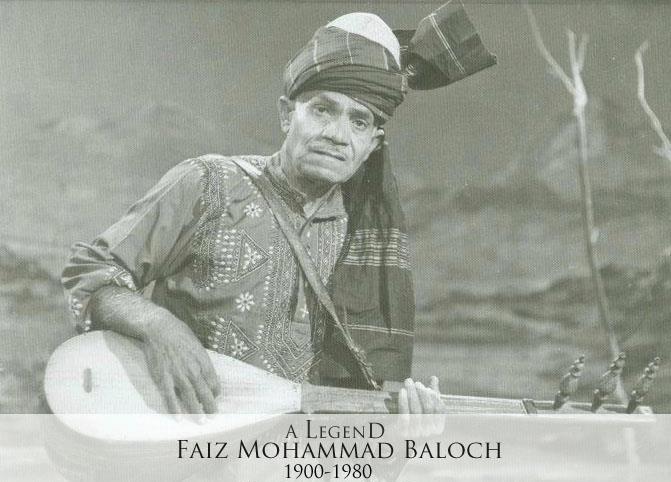
The Baloch: Faiz Mohammad Baloch


Name: Faiz Mohammad Baloch
Father Name: Sheer Mohammad Baloch
Born: 1900
Place of Birth: Qasar Qand (Iran)
Died: 1900-6th May 1980
Place of Death: Quetta(Balochistan)
Famous Songs: "Laila O Laila" & "Yeh Pakistan Hamara"

He Received the pride of Performance from the Govt. of Pakistan. He visited China, Russia, USA, Canada, Afghanistan, Germany, France, South Korea,Lebanon, Spain, Aljazire, & England.

He Visited most of the country with best price of honour, & expren his talent.Faiz Muhammad joined Radio Pakistan in 1948 regularly. He taught by Ustad Noori and Ustad Kher Muhammad(Mama Khero).

He also got education of Classical Music by Ustad Ramzan.

Thursday, 1 November 2012

The Baloch: Mir Jafar Khan Jamali


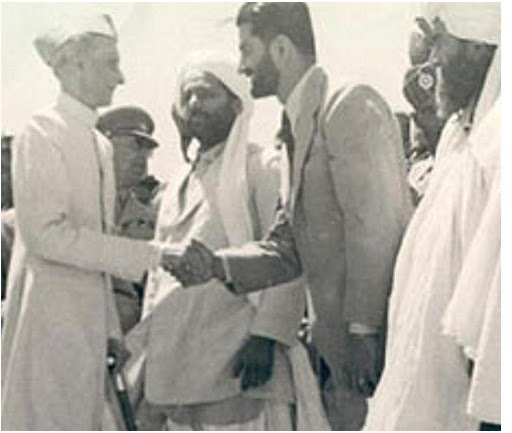
Mir Jafar Khan Jamali. In 1943, on the invitation of Mir Sahib, the Quaid e Azam visited Quetta, the provincial headquarters of Balochistan. He had arranged such a massive reception for the Quaid that he proclaimed Mir Jaffar Khan Jamali and the Jamali tribe as the ‘gateway to Balochistan’.

Mir sahib devoted all his resources towards achieving the goal of a separate homeland for the Muslims and it would not be wrong to conclude that Mir Jaffar Khan Jamali and the Jamali tribe were indeed the ‘gateway to Balochistan’ as proclaimed by Jinnah. This lead to a Baloch Grand Jirga verdict in favor of Pakistan. Before independence, Mir Sahib had served numerous times as a Member of the Legislative Assembly (MLA) from Jacobabad. Mir Jaffar Khan Jamali was the Vice-President of the Balochistan Muslim League and a Senior Leader of the Sindh Chapter of Muslim League


Mir Jafar Khan Jamali engaged Mr. Muhammad Ali Jinnah as a lawyer for a land property dispute with Khan Of Kalat and the British government. Mr. Jinnah won the case, this relationship then change to personal friendship with Mr. Muhammad Ali.

Mir Sahib met his creator on 7th April 1967, in Karachi and was laid to rest in his ancestral graveyard in Rojhan Jamali.

 Zulfiqar Ali Bhutto had suggested to the Jamali family to bury the body of Mir Sahib at the Quaid’s mausoleum in Karachi but this suggestion was turned down by the elders of the family stating that its rightful place is besides their ancestors at their ancestral graveyard. His nephew, Mir Zafarullah Khan Jamali, was 13th Prime Minister of Pakistan. The district of Jafarabad, Balochistan is named after him.

Wednesday, 5 September 2012

The Baloch: Mahnoor Baloch


* Mahnoor Baloch is one of the most beautiful and talented actress/model in Pakistani industry. She was born on 14th July, 1970.

* Mahnoor Baloch got married at the age of 15. Her husband Hamid was seventeen years old at that time.

* At the age of twenty, Mahnoor Baloch started her modeling career.

* In 1993, she entered Pakistani television industry with the drama serial Marvi

* In 2000, Mahnoor Baloch started directing and producing her own Drama serials. Her first serial as director was “Lamhay”. Lamhay drama series was highly appreciated by viewers. Pakistani well known pop singer Shahzad Roy was also in this serial.

* Mahnoor Baloch starts her caree in Hollywood also, her first movie is “Torn”

Mahnoor In Hollywood Movie: Tron

Saturday, 25 August 2012

The Baloch: Akbar Khan Bugti

Akbar Khan Bugti  (July 12, 1927–August 26, 2006)

* Nawab Akbar Khan was born in Barkhan

* Nawab Akbar Bugti was elected in a by-election to the National Assembly of Pakistan in May 1958

* AKber Bugti  served as Minister of State (Interior) in the government of Prime Minister Malik Sir Feroz Khan Noon from September 20, 1958, to October 7, 1958

* Nawab Akbar Khan Bugti remained Governor of Balochistan from 15 February 1973 to 3 January, 1974.

* Nawab Akbar Khan Bugti remained Cheif Minister of Balochistan from February 4, 1989 to August 6, 1990.

* For the 1990 General Elections, Bugti formed his own political party, the Jamhoori Watan Party (JWP), being Balochistan's single largest party and was elected to the provincial assembly.

* In 1993, Nawab Bugti announced his candidacy to be President of Pakistan but later withdrew his candidacy and announced his support of the eventual winner, Sardar Farooq Ahmed Khan Leghari

* Akber Bugti was was elected to the National Assembly of Pakistan in 1993 & 1997.

* On Saturday August 26, 2006, around 22:30 hrs (PST), Bugti was killed when a shell exploded in the cave in which his camp was set.

Akber Bugti with Different Pakistani Leaders:

Akber Bugti With Qaid-E-Azam


Akber Bugti With Bhuto
Akbar Bugti With Ataullah Mengal & Ghous Bux Bizenjo 


Akber Bugti With Benzir Bhuto
Akber Bugti With Nawaz Shareif


Saturday, 21 July 2012

The Baloch: Muzaffar Jamali Baloch

There was so much to be mesmerized. From the Whispering Galleries of Rotunda to Sam Houston Sculptures in Southern Foyer, the Texas State Capital building was every inch a marvel. The curator at the city congress was a Pakistani American. The floor glistened and all of us, the third world dwellers, had no choice but to envy. Twice he mentioned that Texas was the same size as Balochistan. Years later, once I got to know Meer Saheb, I realised that other than size, Texas and Balochistan shared the title too. Both can be rightfully called `The Lone Star State’ only that the star was Meer Muzaffar Hussain Jamali.

Known as Meer sahib amongst his friends, fans and students, this proud Baloch was born in the village of Chowki Jamali, district of Jafferabad. The family marked their time on the meager income from ancestral lands. Though his father could not afford him a high end life, he left him a high-end ideology as an inheritance. On growing up, he realised that the local nobility would never permit him to pursue higher education. The association with the books, in this part of the world, was the recipe of change, a factor the elites of Balochistan hate more than anything. He made a daring choice and left his village for Kharan.

After he had established himself in Kharan, he formed Pakistan Patriotic Forum. This forum aimed at redirecting the youth, who thought that violence was the only way out. Meer sahib guided them to change the world around them but through education. Throughout his life, he remained a strong critic of an imperial mindset. He was against the feudal system of nawabs and sought a new social contract for his people. He believed that the real autonomy lied not in secession but being able to decide the best for community.

In the world of Ted Ex, Steve Jobs and habits of highly effective people, a real life changer like him was underrated. An avid hard-worker with a missionary spirit of the old man at sea, he would spend endless nights working towards a better Balochistan. His command on 12 languages (almost all the regional and mainstay languages) made him easily accessible. Kharan figures out to be a place where unlike executive NADRA centres, registration for ID cards and getting hospital admissions straightened up requires unflinching determination. People showed up at his school for all and anything, job applications, document attestations, a call to the teacher of a son at distant place, ringing up an official for an employment request and the list of tasks that do not even qualify as trivial in the life of a Pakistani sahib. He would drive the crazy miles and trek the contagious hillocks to reach out to his Balochi brethren, at times taking medicine for them, at times for their sick cattle that were lifeline to these nomads.

Kharan Model Public High School, an island of ideology, stands out as a symbol of human resolve and determination. It started off as a state school and had little to do with schooling, until 1994, when it was taken over by Meer Sahib. His tagline was that change is only possible through education and the future of Kharan and Balochistan lied in an educated youth. In the past few years, when we have conveniently opted for indifference towards the Baloch plight, they have picked other modes of conveying the message.

Barring the cantonments, there are fewer places where the national flag can be seen and Kharan Model Public High School is one of them. The hostility runs so deep that often the local administration advises people to take down the flag to avoid violence – that never occurred to Meer sahib. Kharan Model Public High School is the only school in this district of our largest province, where the national flag is respected and the national anthem played every morning, without fail.

Despite tough times, his talent hunts for promising yet poor students continued. Once selected, he encouraged the students, talked to the parents and attended their educational needs. These students ranged from slum dwellers to street vendors. Today there are more than 3000 doctors, engineers and military officers, inspired, motivated and facilitated by him. These students proudly claim that the only thing that stood between them and their fate was the resolve of Meer sahib.

Details

The activities of Meer Muzaffar Hussain Jamali could not skip the attention of militant groups for too long. In an earlier attempt, militants mobbed the school and threatened him but failed in getting the Pakistani flag lowered. On May17, 2012, Meer sahib was ambushed on his way to school, his car sprayed with bullets. There was no doctor available in the vicinity so he was evacuated to Nokkundi and then to Quetta, where he passed away at the age of 38.

Now that he has gone, the Jamali family complains about the indifference of local administration. Unfortunately, Meer sahib’s entire struggle revolved around strengthening the country, so it is very natural for people like us to sit back and see it shatter. Two weeks into the incident, analysts opine that the case has lost its media mass, the NGOs think it’s not worth it and the cosmetics do not qualify for social networking sites either. Abandoned and vulnerable, his five kids await all those who think that Meer did something for the federation.

Daniel Webster said “every unpunished murder takes away something from the security of every man’s life”, but the murder of Meer Muzaffar Hussain Jamali took something more than that. It took away the dream; and more importantly the right to dream from the children of Kharan.

Today, there is no household in Kharan oblivious to the sacrifices and steadfastness of this fine man. Had he lived, this small town would have been a different place. Beyond the loss of the family and the children of Kharan, is the fear that would inhibit anyone who would aspire to study or to facilitate those who want to study. Deep down, a lone Pakistani mourns the loss of a lone star.

<Dawn>

Thursday, 12 July 2012

Baloch Vs Baloch: Maula Baksh Dashti 2nd anniversary


Thousands of people in Mekran paid glowing tributes to slain political activist Maula Bakhsh Dashti in Turbat Wednesday.

People from all walks of life from Dasht, Buleda and Tump gathered in Turbat to pay homage to Dashti on the second anniversary of his assassination by the militant Baloch Liberation Front.

A large number of Baloch women also participated in the rally.

The commemoration to pay tributes to Dashti and other martyrs was organized by the National Party, a Baloch secular and democratic party, that draws its political inspiration from the teachings of the late Mir Ghoush Bakhsh Bizenjo, one of the founders of modern Baloch nationalism who like Dr. Martin Luther King believed in non-violence.

Dr. Malik Baloch, president of the National Party, showered praise on his assassinated colleague and said because of its resources and strategic location Islamabad and other foreign powers were casting an evil eye on Balochistan.

He said workers like Dashti were an obstacle in the way of those conspiring to sell Balochistan for their selfish interests and that was the main reason he was eliminated.


Others who spoke on the occasion included the slain leader's young son Mohammed Jan Dashti, poet Basheer Bedar, former speaker of the Balochistan assembly Mir Akram Dashti, former member of the National Assembly Dr. Yasin Baloch, Engineer Hameed Baloch, Pullain Baloch, Shakeel Advocate and Yar Jan Buledi.

Mohammed Jan Dashti, son of Maula Bakhsh Dashti, paying tributes to his father. The militant B.L.F. has also threatened to kill the son.

During the last two years the B.L.F. has killed at least 100 Baloch in the Dasht area on a false charge of being government informers, according to political sources in Mekran.

The late Dashti, who had nearly four decades of public service behind him, has quite a few close relatives and friends in the U.S. and Canada.

Along with the Balochistan National Party led by Baloch Nelson Mandela Sardar Akhtar Mengal, the National Party has the best political cadres in Balochistan.

<Masti Khan Report>

Friday, 6 July 2012

The Baloch: Murad Bukhsh Baloch


It may not sound unusual that Murad Bukhsh Baloch takes pride in his religion and work, both.

Baloch is a unique Muslim who serves as caretaker of Hindu cremation ground and graveyard, depicting harmonious coexistence in a heavily stereotyped country like Pakistan. 


Gujjar Hindu Cremation Ground, around 150-year-old burial-and-cremation facility for Sindhi Hindus located in Pakistan’s southern-most metropolis Karachi, is significant for half-million followers of the religion here. Just inside huge main entrance gate, Murad has been watching the dead Hindus pouring in to the ground for a quarter of his life. Located in thickly populated Lyari town, the stronghold of late Benazir Bhutto’s Pakistan People’s Party, which she had chosen for her wedding party, Baloch is not only looking after this 22-acre graveyard and cremation ground but also arranging woods and other items required for cremation since 1990.

He passionately cleans and maintains statues lying in small temples inside the premises. He also lights up lamps inside the temple, an important religious rites.

“It’s pleasure to serve the alive and the dead,” he says, adding, “Islam teaches me co-existence and peace.” With 3 million population as per 1998 national census, Hindus are the biggest religious minority of Pakistan.

Majority of Pakistani Hindus are living in Karachi, Mirpurkhas and Sukkur regions of southern Sindh province. Majority of them belong to lower castes, they work as landless peasants, ironsmiths or construction labour.

Besides looking after the arrangements, Baloch guards this prime land in the heart of the city. Like other Asian urban centers, Karachi is a rapidly growing city where land grab for high-rise buildings is the biggest challenge.

‘Targeted killings’ claimed thousands in recent years, some of them fell prey to land grabbers. Sprawling land of Gujjar Hindu Cremation Ground remains seriously vulnerable. He smilingly remarks, “The Balochs known to be warriors and even before Pakistan’s creation, we have served the Hindus for decades in Karachi.”


According to official data, today Karachi is home to over half a million Hindus. Except a few, Hindus mostly are poor and belong so-called lower castes. The poor ones bury their dead, while the rich and upper-caste Hindus cremate their deceased dear ones.

Besides performing a role of traditional pundit (religious leader) in the temple, guarding the land and taking care of other religious rites, Baloch also serves warden for ashes, which were kept in this graveyard.

Hindus burn their dead and preserve the ashes in a cremation ground. Each of 130 earthen pots or plastic jars here is tied with red-and-white cloth, wrapped in flower wreaths and tags carry various identification details in Sindhi, Urdu, Hindi or English language.

The facility is not exclusive to the Hindus as Buddhists, Japanese and Chinese communities also preserve ashes of their dead here. Ironically, when family members of the deceased wanted to take their ashes to immerse them in holy water of Ganges in India, the Pakistani Hindus were denied such religious rites across the border after 1971.


Only recently, the Pakistani Hindus won this right from India and ashes Baloch had been guarding for the last 21 year were taken there to immerse in the holy Ganges.

While talking to this correspondent, he was continuously directing some men to keep an eye on the workers, as construction was underway in the cremation ground.

When he was a child, his family lived near the historical cremation ground where people used to spend their evening as there were not many public parks around back then.

As a child, Baloch witnessed several bodies being cremated in the ground. “I used to wonder why Hindus burn their dead,” his elders used to tell him that it is an important rite of Hindu religion.

He still remembers image of Maharaj Durga Bharati, a Hindu pundit and caretaker of the cremation ground, who used to perform religious rituals during the funerals. “Bharati was a nice man who distributed candies and toffees among the children and greeted everyone, even Muslims in this Hindu graveyard-cum-cremation,” recalls Baloch.

Nostalgic Baloch says those were good times when nobody discriminated on the basis of religion. People were indentified with their respective profession. He doesn’t have any problem working here, thus he wants his son Ayaz Baloch to succeed him.

Dr Govind Ram Dheerani, secretary general of Pakistan Hindu Foundation, says, “I am happy to find Baloch as caretaker of the graveyard as only a Muslim can work properly here in a country like Pakistan.”

Though religious extremism is on the rise in Pakistan, since the partition in 1947, inter-communal relations in Sindh remained generally peaceful, and the province has never witnessed any major anti-Hindu violence. Knee-jerk reaction to extremist Hindus’ demolition of Babri Masjid in Indian city of Ayodhya in 1992 is the only incident of its kind.

The Hindus and Muslims of Sindh enjoy a shared cultural heritage besides common Sufi influences.

Thursday, 26 April 2012

The Baloch: Future Leaders- Mariyam Suleman


Mariyam Suleman from Gowadar, Baluchistan,She is studying under the State Department Yes Program. In culture programme of Community presentation, She got second position. Mariam plans to write a book in Balochi language on her experiences in the US.

VOA Report: